
Microsoft Promises WinUI and XAML Remain Alive Despite Reactor Launch
Microsoft recently introduced an experimental framework named Microsoft.UI.Reactor. Following the launch, the tech giant quickly clarified its intentions. The company will not deprecate WinUI and XAML. Developers naturally harbor doubts about this promise. After all, Microsoft previously abandoned UWP and abruptly discontinued Silverlight.
The Foundation Remains Unchanged
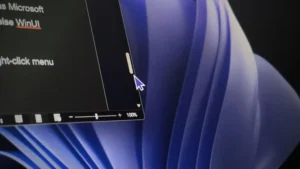
WinUI serves as the native interface framework for Microsoft. Developers use it to build applications that follow the Windows 11 design guidelines. The native Settings application is a prime example of this architecture. Meanwhile, XAML acts as the markup language developers utilize to describe user interfaces.
Reactor builds directly upon the WinUI foundation. It provides an entirely new method for writing native interfaces directly in C#. Consequently, developers no longer need to write XAML code. Clearly, Reactor does not exist to replace WinUI. However, this shift makes people wonder if it will become the final blow for XAML. For many years, XAML has felt somewhat neglected by the programming community.
Windows Latest recently reached out to Microsoft regarding this transition. In response, the company pointed to new documentation and relevant open-source resources. Alexandre Zollinger Chohfi clarified the situation in a late October developer blog post. He wrote, “WinUI is the underlying foundation. XAML is the mainstream solution for using WinUI, and it will not be deprecated. Related investments are still continuing.”
A History of Abandoned Projects
Microsoft had to explicitly clarify this situation to ease developer anxiety. This action is slightly ironic, but it represents a highly prudent approach. Following the demises of Silverlight and UWP, developers have valid reasons for caution.
The company possesses a notorious history of axing major products. Microsoft officially ended support for Silverlight in October 2021. Furthermore, UWP theoretically remains under maintenance. However, Microsoft itself no longer uses it to develop new applications. Official documentation explicitly states it is “no longer under active development.” Therefore, calling it functionally dead is hardly an exaggeration. Ultimately, the original vision of “one application, adapting to all devices” has completely failed.
Today, Microsoft advises creators to adopt the Windows App SDK and WinUI for new projects. The public has witnessed the company heavily promote initiatives only to ruthlessly cancel them later. Prime examples include Project Astoria, the Windows Subsystem for Android, and the iOS bridge project. The tragic fate of Windows Phone is another glaring instance.
Admittedly, Silverlight, UWP, and WinUI occupy distinct market positions. Nevertheless, this history perfectly explains the current developer skepticism. Whenever Microsoft announces a new framework, programmers naturally feel anxious. We lack sufficient reasons to believe the current leadership operates differently than before. Moreover, the corporation recently initiated company-wide restructuring efforts. These moves aim to reduce expenses and increase artificial intelligence investments. Consequently, this shift might lower the priority of Windows and hinder the ecosystem’s recovery.
A Continuous Evolution Strategy
Earlier this year, Microsoft offered a similar promise regarding WinUI. At the Build 2026 developer conference, Chris Anderson addressed the community. He stated that the company “has no plans to develop an entirely new framework.”
Microsoft even simplified the WinUI 3 branding to just WinUI. This move prevents developers from mistakenly anticipating an impending WinUI 4 release. The company wants to discourage programmers from waiting passively for a new version.
This naming strategy effectively highlights technological continuity. It closely mirrors the successful approach taken with Microsoft 365. Customers do not wait annually for a hypothetical Microsoft 365 v2. They understand the software will receive continuous, incremental updates over time.
The software giant attempted a comparable strategy during the Windows 10 era. At the time, they boldly claimed Windows 10 would be the final operating system generation. Unfortunately, they eventually backtracked on that bold statement. This service-based model also presents challenges for equipment manufacturers. If existing computers continuously receive new features, users feel less motivated to purchase new hardware.
Transforming UI Development
Why is the Reactor project truly significant? Not all Microsoft initiatives end in failure, and Reactor shows immense promise. If this framework develops smoothly, the Windows platform could welcome numerous new native applications. Perhaps we can finally say goodbye to bulky, WebView-based software.
This exact innovation is what many creators have eagerly anticipated. It appeals immensely to programmers familiar with modern paradigms like SwiftUI, React, and Jetpack Compose. If you have utilized any of those frameworks, adopting traditional WinUI feels archaic. You still have to spend time learning XAML. However, this new solution closely aligns with modern coding habits. In my view, it has the potential to trigger a massive, positive transformation.
Currently, developers accustomed to XAML notice a distinct structural problem. Interface state management code and markup code are scattered across multiple files. In certain scenarios, this separation becomes incredibly tedious. Reactor elegantly solves this structural dilemma. It permits creators to write interface styles and component states cohesively together. This consolidated approach significantly reduces the total number of required files.
Importantly, the underlying technology remains consistent. Even if developers switch to C# and abandon XAML, the system still invokes native WinUI controls. This includes text boxes, navigation views, and various other essential components.
Microsoft firmly guarantees that Reactor does not introduce an independent rendering engine. It also avoids relying upon any browser-based interface architecture. This deliberate design choice ensures WinUI remains completely unaffected.
The official GitHub documentation clearly defines the project’s scope. “Reactor is not a new interface platform,” the repository states. “It is merely a new way to describe WinUI interface content.”
One enthusiastic developer expressed strong optimism about the project. They commented, “My first reaction was ‘finally.’ I hope it gains widespread adoption. It will make native Windows development much easier for developers from other tech stacks. It is hard to imagine what the ecosystem would look like without bloated Electron software.”