
Linux 7.3 Patches Samsung 990 PRO Readiness Bug
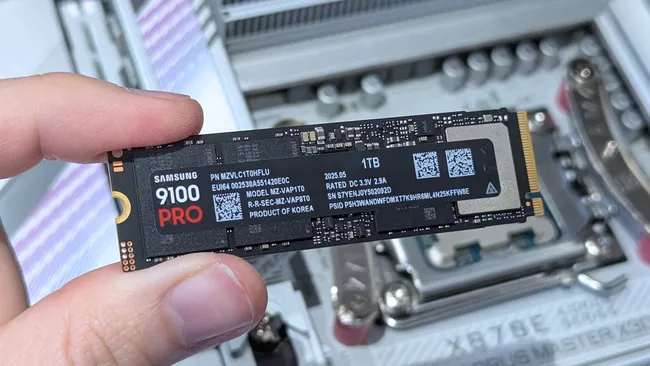
Recent reports confirm that the Linux 7.3 kernel successfully merged a crucial patch. This specific update addresses a compatibility issue affecting the Samsung 990 PRO and 990 EVO Plus solid-state drives. The fix specifically targets the “Immediate Readiness” functionality inherent to this hardware series.
Crucially, “Immediate Readiness” does not represent an exclusive Samsung SSD acceleration technology. Instead, the broader PCIe 4.0 specification originally introduced this specific flag. It formally indicates that a device can instantly respond to system configuration requests immediately following a hardware reset. Consequently, the operating system can safely bypass standard waiting periods, significantly shortening the post-reset recovery process.
Discrepancies in Device Capabilities
According to the detailed Linux 7.3 kernel repair notes, a frustrating inconsistency exists. The “capabilities claimed by the device” simply do not align with the “actual firmware behavior.”
The investigation highlighted specific device and firmware scenarios:
* The Samsung 990 PRO, utilizing older firmware like 1B2QJXD7, actively claims support for Immediate Readiness. However, following a Function Level Reset, configuration read requests fail to return valid data within the expected 7ms timeframe.
* Conversely, the repair documentation explicitly states that the Samsung 990 PRO utilizing newer 8B2QJXD7 firmware successfully responds immediately after a reset.
* Worryingly, similar problems plague the Samsung 990 EVO Plus, particularly when running firmware version 2B2QKXG7.
The Kernel Fix Explained
Developers have now officially integrated this essential repair program into the Linux 7.3 release. The accompanying Git commit message provides further technical context:
The Samsung 990 PRO [144d:a80c] falsely advertises the “Immediate Readiness” capability. Consequently, the pcie_flr() function erroneously proceeds without waiting following an FLR. Unfortunately, the drive persistently returns ~0 for up to 7 milliseconds.
Furthermore, since a previous specific commit (“PCI: Discard unnecessary retries when restoring BARs”), configuration restoration post-FLR simply fails. This completely breaks the VFIO passthrough functionality for the drive. While firmware 8B2QJXD7 responds correctly immediately after an FLR, older iterations (such as 1B2QJXD7) absolutely do not. Compounding the issue, the system cannot readily identify the firmware version at this specific execution stage.
[Additionally noted: The Samsung 990 EVO Plus [144d:a80d], specifically running firmware version 2B2QKXG7, seemingly exhibits this exact same troublesome behavior.]
This entire dilemma revolves around the Function Level Reset (FLR). Linux trusted the device’s Immediate Readiness flag, subsequently eliminating the standard post-FLR waiting period. However, because the device had not actually reached a prepared state, the subsequent configuration restoration inevitably failed.
To permanently resolve this, Linux implements a pragmatic approach. The kernel “no longer directly trusts” the capabilities reported by the affected devices. Now, it deliberately pauses after a function-level reset before attempting to restore the PCI configuration. Because the relevant kernel code cannot reliably ascertain the specific firmware version, this universal treatment avoids the complexity of individual firmware identification. Ultimately, this robust solution significantly enhances the reliability of virtual machine passthrough operations.