Google Play Lets Users Run Private Vibe-Coded Apps Directly on Android
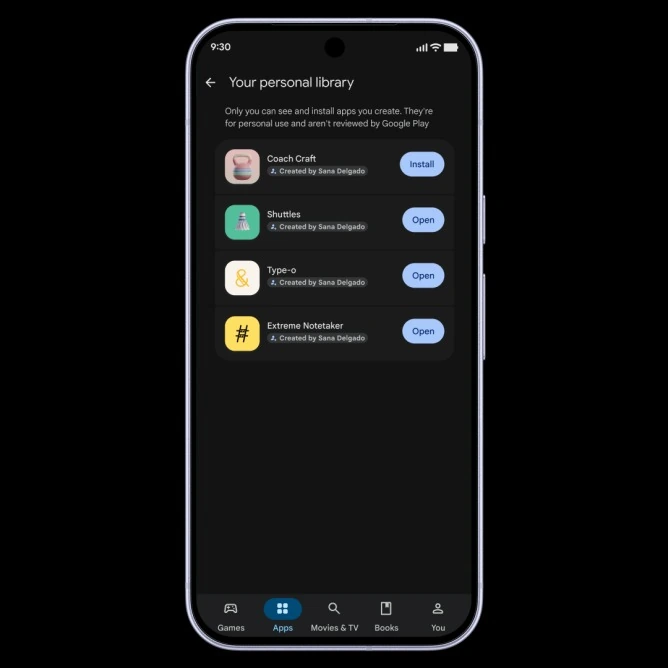
Google announced on Tuesday that users can now run custom “vibe-coded” applications directly on their Android smartphones without publishing them publicly. Through a new Google Play Store update, individuals can use a standard Google account to launch personal applications on their devices while keeping them completely private.
Empowering Personal App Creation via Google AI Studio
These private applications will never appear in public Google Play Store search results or listing pages. Consequently, no one other than the original creator can access or view them. This initiative arrives as a growing number of consumers leverage artificial intelligence to build bespoke software tailored to their specific daily needs. Previously, running a custom application on an Android handset required publishing it on the storefront, potentially exposing it to three billion active users. Because of this hurdle, many creators opted to build cross-platform web applications rather than native Android software.
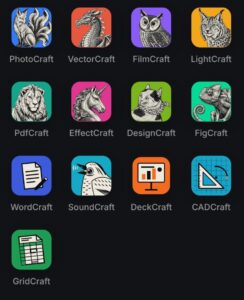
Now, Android users can build custom software using vibe coding within Google AI Studio and deploy it strictly for personal use. Although these creations must still adhere to existing Google Play Store policies, the streamlined workflow allows everyday users to experiment with native Android development effortlessly. Initially, this feature is rolling out exclusively to users aged 18 and older in the United States.
Transitioning to Personalized Software and Trusted Sharing
Sam Bright, Vice President and General Manager of Google Play and Developer Ecosystem, highlighted this shift during a media briefing ahead of Tuesday’s launch. “This represents the future of applications on Google Play – personalized, secure, and accessible for everyone to create,” Bright stated. “This is also why the storefront is pioneering the transition from ‘there is an app for everything’ to ‘an app built specifically for me.’ When Google Play launched, its goal was simple: helping you find the apps you love. Starting today, we hope people see how it has evolved to deliver even greater value.”
Furthermore, Google noted that within the coming months, creators will be able to share their vibe-coded projects with a trusted circle of friends. For instance, an application built for family members, close friends, or a child’s Little League baseball team can operate within a small private group without requiring a public storefront release. If a personal project eventually gains substantial popularity, the creator can complete a standard trust and safety review to transition it into a public application available to everyone.
AI-Powered Game Discovery, Ask Play, and Parental Controls
Beyond personal software creation, Google is overhauling its storefront discovery mechanisms using artificial intelligence. Specifically, the company introduced Game Finder, a personalized gaming recommendation engine powered by Google AI. Launching first in English across the United States, the tool synthesizes individual gaming preferences with insights gathered from the platform’s community of 1.2 billion players.
Additionally, Google Play will allow players to curate custom game lists, post questions in a dedicated community forum, and compete in 48-hour gaming challenges called Sprints. Meanwhile, the built-in Ask Play assistant received an upgrade featuring a new comparison tool that highlights core differences between similar applications. Storefront apps and games will also integrate more deeply with conversational Gemini capabilities. Finally, Google introduced a new age-bracket feature that lets parents share their child’s general age range with developers rather than an exact birth date, ensuring age-appropriate digital experiences.