
OpenXR Introduces Spatial Containers for Advanced Multitasking
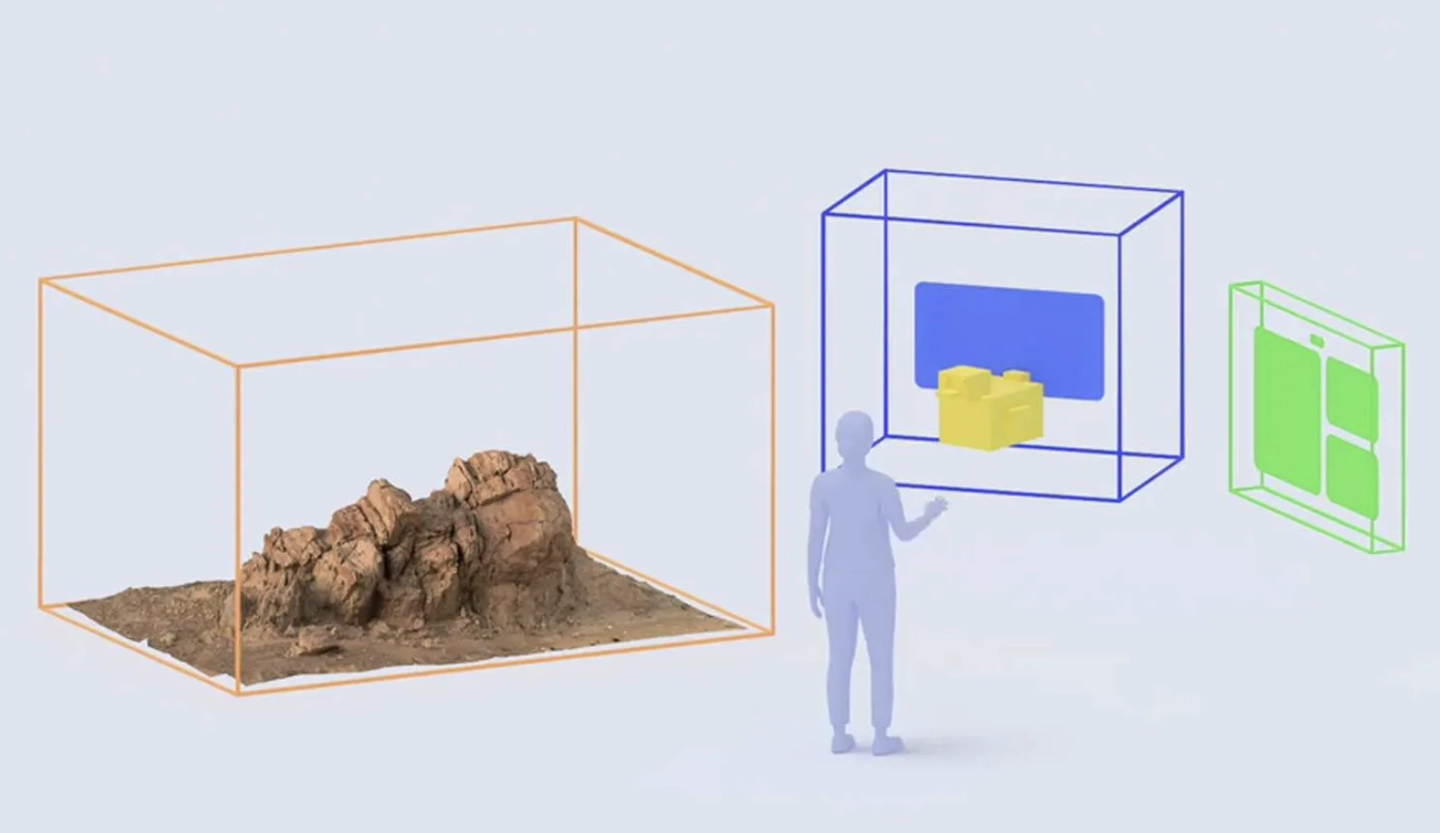
The Khronos Group, the esteemed organization responsible for advancing the OpenXR standard, recently announced a groundbreaking feature. They officially introduced an innovative capability known as “Spatial Containers.” The underlying operating system uniformly manages these specialized containers. Essentially, they permit applications to display immersive XR content within clearly defined boundaries. As detailed in the OpenXR Spatial Containers announcement, this sophisticated mechanism operates much like traditional application windows within a conventional desktop operating system.
Two Distinct Operational Modes
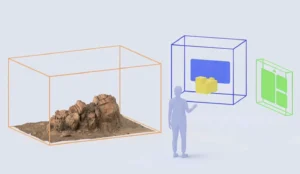
According to an impressive demonstration video showcased by the Khronos Group, “Spatial Containers” seamlessly support two distinct operational modes. The first is a highly versatile “bounded” mode specifically engineered for fluid multitasking. This setting allows an application to display its content in a shared spatial environment parallel to other active programs.
Conversely, the second option provides a fully “immersive” mode. In this state, a single application expands to dominate the user’s entire field of vision. By leveraging this ingenious mechanism, developers gain unprecedented flexibility. They can meticulously control exactly how their applications present themselves within complex XR environments.
Challenging the Apple visionOS Experience
Prominent technology publication Road to VR observed striking similarities in this new design. They noted that this approach closely mirrors the acclaimed interactive logic found within Apple’s visionOS. Consequently, users can effortlessly run multiple spatial applications simultaneously within a unified environment.
In stark contrast, competing platforms like the Meta Quest currently suffer from notable multitasking limitations. Presently, a Quest user can only actively engage with one fully spatial application at any given time.
The Road to Widespread Implementation
The Khronos Group proudly stated that they have already approved and officially published the “Spatial Containers” specification. Starting this year, various diverse platforms residing within the expansive OpenXR ecosystem will gradually begin implementing these exciting functionalities.
However, the official publication of a standard does not automatically guarantee immediate support across all existing hardware. The actual availability of these features depends entirely upon the individual implementation schedules of respective platform manufacturers.
Currently, the impressive roster of devices and platforms supporting OpenXR is vast. It includes industry heavyweights like the Meta Quest, alongside all PC VR headsets compatible with SteamVR. Furthermore, it encompasses Steam Frame and emerging headsets based on the Android XR architecture. Renowned manufacturers such as Varjo, Magic Leap, and XREAL also actively support the standard.
As developers systematically integrate these powerful new extensions, these varied platforms will significantly evolve. In the near future, they are poised to deliver a highly sophisticated spatial experience that rival the seamless multitasking capabilities currently exclusive to visionOS.