
HTC HD2 Successfully Runs iOS 7 Via Custom XNU Port
A Legendary Device Meets Apple Software
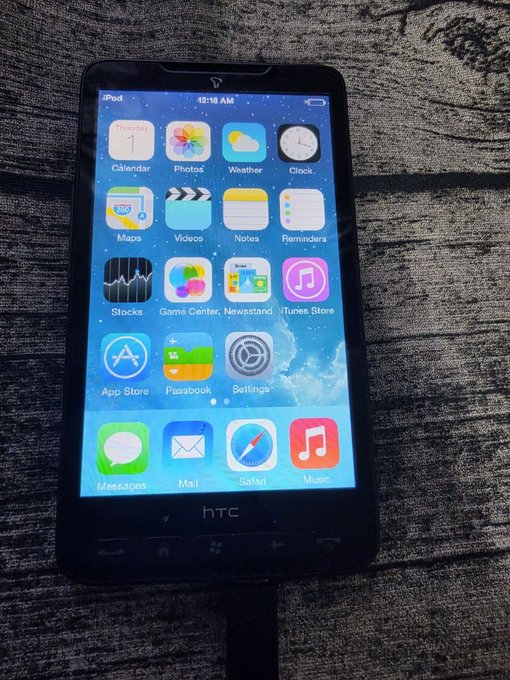
Developer j0sh1x unveiled a remarkable retro hardware porting project yesterday. He successfully demonstrated iOS 7 running on the legendary HTC HD2. Furthermore, he released the associated XNU kernel and hardware support code. Publicly available information indicates a significant milestone. The project now executes iOS user-space components directly on the device. Additionally, the touchscreen functionality is fully operational.
HTC released the HD2 back in 2010. Internally, the company referred to it by the codename HTC Leo. The smartphone features a Qualcomm QSD8250 processor. Notably, this ambitious endeavor does not rely on a software emulator. Instead, it involves a direct port of the XNU kernel to the native hardware platform. Consequently, the developer provided dedicated support for the processor, memory, and display. He also ensured proper functionality for the touch interface and storage components. The public repository identifies the target platform as QSD8250_LEO. It utilizes the standard ARMv7 Thumb architecture.
Exploring the GitHub Repository
You can explore the GitHub repository dedicated to this XNU kernel and board support. The developer modified the existing HTC-Leo-Revival-Project codebase. Therefore, the repository contains custom CPU and interrupt code tailored for the HD2. Moreover, it integrates specific timer and memory mapping configurations. The project also features SDCC storage and MDP display output. Thus, it successfully delivers the corresponding IOKit display and HID services.
A review of the project documentation reveals a crucial detail. This repository does not serve as a complete, flashable ROM. Instead, it primarily consists of raw source code. Building the project requires an external Darwin or Mach-O ARM toolchain. You also need the generated XNU header files and a matching target configuration. The repository lacks Apple user-space components and a root file system. It also omits the base firmware and required boot images. Therefore, enthusiasts cannot simply interpret this as a ready-to-install package.
The Core of the Port
The XNU kernel stands as a central pillar of this porting effort. Apple utilizes XNU as the hybrid kernel for its Darwin system. It forms the foundational core of operating systems like macOS and iOS. Specifically, it combines the Mach kernel with robust FreeBSD components. Apple continues to publicly maintain the XNU source code today. However, support for the 32-bit ARM architecture now belongs strictly to legacy platforms.
The project repository emphasizes an important caveat regarding code stability. Current static audits only verify source file paths and local header dependencies. They do not guarantee that the code will compile flawlessly. Furthermore, they do not ensure stable hardware operation upon booting. You can view the actual demonstration of the HTC HD2 running iOS 7 online. Nevertheless, users must regard the open-source repository as an ongoing development initiative. It is definitely not a mature, universal flashing solution.
The Legacy of the HTC HD2
The HTC HD2 previously earned a reputation as a universal device. It boasted a highly open boot environment. Consequently, it enjoys a rich history of third-party system ports. Community archives show successful unofficial ports of Windows Phone, Android, and Symbian. Now, this remarkable iOS 7 project pushes the boundaries even further. It successfully brings the mobile operating system from Apple to this iconic piece of hardware.