

Critical Security Flaws Uncovered
Fourteen vulnerabilities in Linux and FreeBSD have paved the way for severe cyber attacks. These flaws allow root privilege escalation, container escapes, and virtual machine breaches. Functional exploits have already emerged for several of these severe flaws. Moreover, certain issues were disclosed before developers could issue appropriate patches.
Researchers discovered multiple severe vulnerabilities within the Linux kernel. The Zero Day Initiative prematurely disclosed five of these flaws. This premature release occurred after someone inadvertently sent information to the incorrect mailing list.
The ksmbd File Server Exploits
Two specific issues compromise the integrated ksmbd file server. These flaws, designated as ZDI-CAN-33549 and ZDI-CAN-33774, enable remote code execution at the kernel level. Consequently, developers have already crafted exploits targeting Debian 13 for both vulnerabilities.
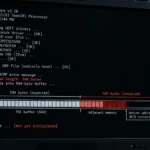
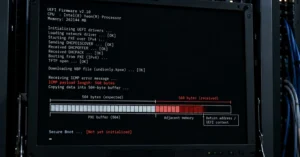
The initial flaw involves an integer overflow during SMB Direct operations over RDMA. This attack requires write access to a shared repository. Subsequently, the second vulnerability stems from a dangerous race condition. This condition forces 62 bytes of an SMB2 header into a tiny 40-byte buffer. Historically, ksmbd vulnerabilities have permitted attackers to seize maximum privileges via the network file service.
Additional Linux Kernel Disclosures
Three additional disclosures affect other core Linux components. The ZDI-CAN-33367 vulnerability allows a local user to achieve root access via an skb_zerocopy error. Similarly, ZDI-CAN-34068 is linked to a buffer overflow within the VMware VMWGFX graphics driver. Security experts have published attack prototypes for both of these critical flaws. Finally, a fifth vulnerability resides in the nvmet driver. This flaw possesses the potential to expose sensitive kernel memory contents.
The Infinity Core and Vghost Vulnerabilities
In a separate revelation, researchers unveiled a cluster of five vulnerabilities collectively dubbed Infinity Core. These flaws facilitate privilege escalation and circumvent standard container isolation mechanisms. Testers successfully validated exploits on Ubuntu, Arch Linux, and a Samsung Galaxy S26 Ultra smartphone. Fortunately, developers have rectified these errors in the latest kernel iterations.
Furthermore, researchers exposed the Vghost vulnerability within the vhost subsystem. Due to antiquated memory address cache entries, a malicious actor could secure root access. In specific virtualization environments, they could even compromise the host kernel. This persistent issue had existed since Linux version 4.11. Security teams successfully corroborated the published exploit on Ubuntu, RHEL, Amazon Linux, Azure Linux, and Oracle Linux.
FreeBSD Hypervisor and Sound Driver Risks
Within the FreeBSD ecosystem, four distinct vulnerabilities impact the sound driver and the Bhyve hypervisor. The primary flaw permits local privilege escalation. Meanwhile, three subsequent Bhyve issues generate a profound risk of guest system escape.
As detailed in the official security bulletin for FreeBSD, malicious code can escape a virtual machine. It could potentially run directly in the host user context. However, Capsicum sandboxing currently constrains this unauthorized execution.
Recommended Patching Actions
Essential FreeBSD patches have been integrated into recent system releases. Administrators should immediately update to versions 15.1-RELEASE-p5, 14.5-RELEASE-p2, or 14.4-RELEASE-p11. An independent error in tcp_rack also allows for remote buffer overflows and subsequent kernel panics. Linux administrators must similarly scrutinize their system updates. Furthermore, they must restrict access to any vulnerable system components. Previously, security experts proposed a Killswitch mechanism to defend against such catastrophic failures. This concept would enable the temporary deactivation of specific kernel functions during an active attack.