
Google’s Gemini glasses now cost $395 and up, and you can pre-order a pair today. The catch is who can actually use them. They work only with Google accounts from the United States and South Korea, and only for adults 18 and older.
Google opened pre-orders on November 12 for its Intelligent Eyewear line. Gentle Monster and Warby Parker designed the frames, and Samsung engineered the hardware. Store and online sales start December 10, according to Google’s pre-order announcement and Samsung’s December release note.
What you get for $395 or $449
The glasses have no display. Instead, a 12-megapixel ultra-wide camera sees what you see, and Gemini answers through open-ear speakers. You wake it by saying “Hey Gemini” or by tapping the frame.
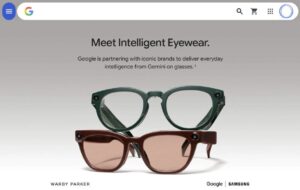
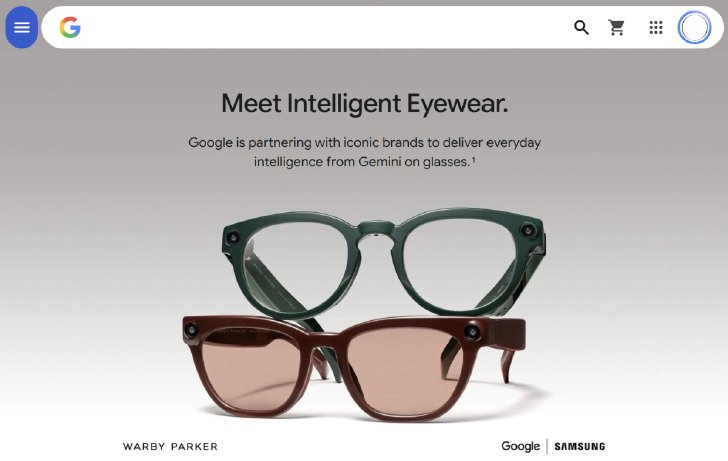
There are 30 designs in total. Warby Parker offers 14 variations built on three styles: Alden, Reid and Wren. They come in optical or sun versions, in Pine, Saddle and Jet Black. Prices start at $395.
Gentle Monster offers 16 variations across six bolder frames, in colors such as dark red, pink, gray and yellow. Lenses can be tinted, clear, blue or brown. Google lists a starting price of $449, while Samsung puts the range at $449 to $489 depending on the model.
Most frames accept prescription lenses. You add them on the partner product pages.
Where to buy and try them
Warby Parker sells its line in the U.S. only, through its stores and website. Gentle Monster sells in the U.S. and South Korea through its online store. Google says buyers can sign up for guided demos at more than 360 Warby Parker locations.
Demo locations differ slightly between the two announcements. Google names select Gentle Monster, Warby Parker and Google Store sites. Samsung says hands-on demos start December 10 at select Samsung retail locations.
What changes for you
Your phone and your account decide what you get. The official Google glasses product page lists these compatible phones:
- Google Pixel 7 series and later, on the Android 17 September 2026 update or later
- Samsung Galaxy S, S FE, Z Fold, Z Flip and Z Fold Ultra series on One UI 9.0 or higher
- iPhone 13 and later with at least 6GB of RAM, on iOS 26.6 or later
Google’s blog post simply says “iPhone 13 Pro and above.” Read together, the RAM rule leaves out the standard iPhone 13. Check your model before you order.
Android users get more at launch
Some features skip the iPhone for now. Google says Guided Vision and Aira work only with a compatible Android phone at launch. Audible support is Android-only too.
Guided Vision describes your surroundings for people who are blind or have low vision. It reads small print and helps find everyday items. Saying “Hey Gemini, open Aira Explorer” streams the camera to a trained human visual interpreter. Both may need a subscription or membership.
Galaxy owners get a few extras. Samsung says Bixby works only with Galaxy phones. It also says split computing moves some processing to a paired Galaxy phone.
Smartwatch owners can control the glasses with gestures, 9to5Google reports. A double pinch on a Pixel Watch or Galaxy Watch plays or pauses. A palm-up double pinch calls Gemini, but only on a Pixel Watch. Fitbit Air support is due next year.
Everyday features
Gemini can explain a mural, recommend books from a shelf, or check your calendar against an event poster. It can add items to a grocery list. Google Maps gives turn-by-turn audio directions. Google Translate offers live speech translation in more than 70 languages.
Samsung adds a work example. You can capture a whiteboard and have Gemini summarize it into Samsung Notes. The glasses also read out messages, take voice replies and handle calls. Music works with YouTube Music, Spotify and Apple Music.
How it compares with rivals
Meta is the obvious rival. The table uses only figures from the official announcements, 9to5Google and Android Central’s smart glasses guide.
| Model | Starting price (US) | Display | Notes |
|---|---|---|---|
| Google Intelligent Eyewear (Warby Parker) | $395 | No | 12MP camera, up to 9 hours battery |
| Google Intelligent Eyewear (Gentle Monster) | $449 | No | Same hardware, bolder frames |
| Oakley Meta HSTN | $399 | No | Meta AI glasses |
| Meta Ray-Ban Display | $799 | Yes, in the right lens | Ships with Meta Neural Band |
| XREAL Aura | $1,279 | Yes, see-through | Android XR, separate compute puck |
Google’s pair sits at the low end of this list. Unlike Meta’s Display model and XREAL Aura, it shows nothing in the lens. All output comes through audio.
Privacy rules built into the glasses
Google published a separate post on privacy protections for intelligent eyewear. An outward-facing LED lights up when you take a photo or video. Sensors block capture if someone covers or tampers with the light. Google says the light is “designed not to be messed with.”
9to5Google adds that Google runs a hardware check on the light while the glasses charge. Recording also stops when you take the glasses off.
Before images go to Gemini, the glasses blur bystanders’ faces. Google says camera visuals sent to Gemini do not go into Gemini History. It also says they are not used to train AI models or target ads. Photos you ask Gemini to take go to your gallery.
Rules for apps and users
Google Play will not allow apps that use the glasses camera for social live-streaming. Apps also cannot do real-time facial identification or change the indicator light. Each app must ask before it first uses the camera.
Users must agree not to record people without permission or in sensitive places. Covering the light is also banned. Google says violations breach its terms and may cost you use of the device. Google Shopping and Ads will not promote products that hide recording lights.
A physical switch turns the glasses fully off, so you can wear them as normal glasses. Data on the glasses is encrypted, and so is data in transit. Google says Private AI Compute for glasses is “coming soon.”
Technical specs
- Chip: Qualcomm Snapdragon AR1 Gen 1, with 2GB of memory and 64GB of storage
- Camera: 12MP ultra-wide with HDR and stabilization; video up to 3K at 30fps
- Photos: 3:4 portrait at 3,024 x 4,032, per Samsung
- Audio: two open-ear speakers and four microphones
- Battery: up to 9 hours per charge; up to 72 hours with the case, per Samsung
- Charging: about 60% in 30 minutes using the case
- Weight: about 41g; 9to5Google reports 40 to 44g by model
- Case weight: 166.8g (Warby Parker) and 194.5g (Gentle Monster)
- Connectivity: Wi-Fi 6E and Bluetooth 5.4
- Water resistance: IPX4 for splashes, light rain and sweat
Some functions need a Bluetooth link to your phone. Volume, battery checks and photos work without one.
What remains unclear
Google has not said when the glasses will reach other countries. Its pages limit use to U.S. and Korean accounts. Google also has not given a date for Guided Vision, Aira or Audible on iPhone.
Some features may also need a paid plan. Google’s product page says some features require setup or a subscription, but it does not list which ones or what they cost.