
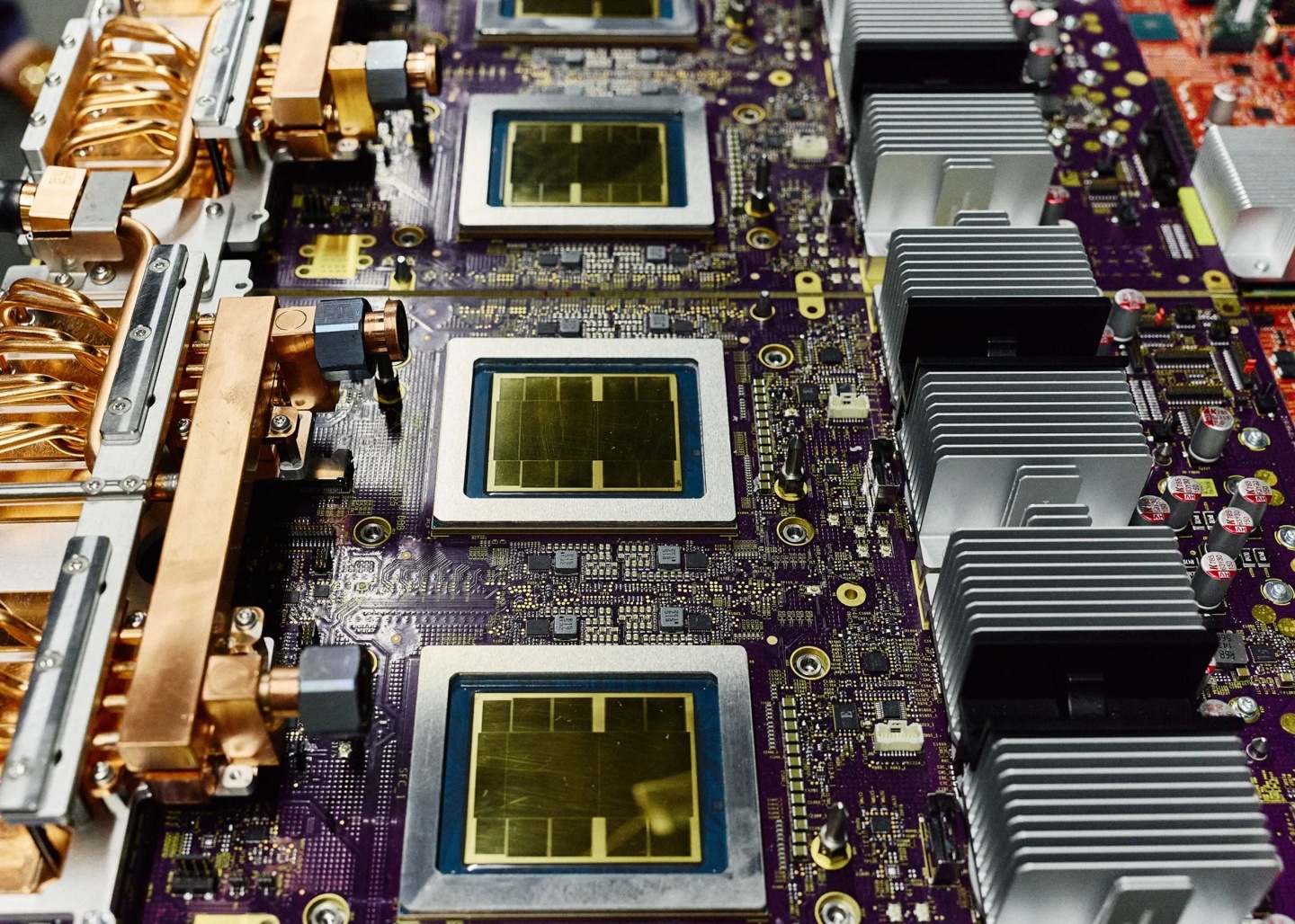
Google now sells four eighth-generation TPU systems, and it introduced all four within a single year. The two newest, TPU 8tx and TPU 8i Max, were unveiled on November 9. Both will become available next year, Bloomberg reported in its interview with Google chip chief Amin Vahdat.
Neither one is a brand-new chip. Vahdat told Bloomberg they are reconfigured versions of existing designs, built around specific customer requests. One is for confidential work on sensitive data. The other is for AI tasks that need very long context windows.
What Google announced
Vahdat, Google’s SVP and Chief Technologist for AI and Infrastructure, wrote the official Google announcement of TPU 8tx and TPU 8i Max. He called it “the first time we have introduced four TPU systems in a single year.”
That is a faster pace than before. Google used to release a new AI processor about every two years, according to Bloomberg. In April, at Google Cloud Next, it launched TPU 8t for large-scale training and TPU 8i for real-time reasoning.
TPU 8tx: confidential computing
TPU 8tx uses the same silicon as TPU 8t. Google pairs it with 5th Gen AMD EPYC CPU hosts. Bloomberg describes this as part of a collaboration between Google and AMD.
The main feature is hardware-level confidential computing. Google says it keeps data and model weights isolated while they are in use, not only at rest or in transit. Vahdat told Bloomberg the system encrypts data at the chip level. As a result, information does not need to be decrypted in memory during processing, as it does on traditional computers.
Google also says TPU 8tx offers up to 2x lower latency than TPU 8t. It borrows the Boardfly network used by TPU 8i. Bloomberg says the target buyers are government agencies and regulated industries.
TPU 8i Max: long context windows
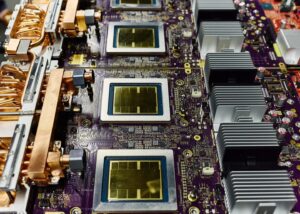
TPU 8i Max puts two TPU 8i chips in one package. Compared with TPU 8i, Google says it doubles compute, on-chip SRAM and HBM bandwidth. It fits twice the silicon into the same rack space.
A context window sets how much data an AI model can consider in one request. Vahdat told Bloomberg that long windows matter for drug discovery, math and coding. SiliconANGLE notes that Google developed the chip alongside its long-context work on Gemini, which supports 1 million tokens.
How the four eighth-gen TPUs compare
The table below uses Google’s own figures. No independent benchmarks of TPU 8tx or TPU 8i Max have been published yet.
| System | Main job | Key detail from Google | Announced |
|---|---|---|---|
| TPU 8t | Large-scale training | Up to 2.7x better training performance than the previous generation | April 2026 |
| TPU 8i | Real-time reasoning | 80% better inference price-performance than the previous generation; cuts chip-to-chip delays by up to half | April 2026 |
| TPU 8tx | Confidential inference and small-scale training | TPU 8t silicon with 5th Gen AMD EPYC hosts; up to 2x lower latency than TPU 8t | November 2026 |
| TPU 8i Max | Long-context inference | Two TPU 8i chips in one package; 2x compute, SRAM and HBM bandwidth vs TPU 8i | November 2026 |
What changes for you
Governments and regulated companies
TPU 8tx gives these buyers one confidential system for running and customizing models. Google lists fine-tuning on private data, shrinking large models into smaller ones and training agents with reinforcement learning. It says this avoids moving sensitive data between separate clusters.
Cloud customers
Google says customers can also deploy TPUs in their own data centers. Oracle will let its cloud customers use TPUs starting next year, Bloomberg reports. Until now, Oracle’s cloud offered AI chips only from Nvidia and AMD. Oracle executive Karan Batta said customers want more choice as AI workloads grow more complex.
Developers
Google open-sourced TorchTPU last month, so PyTorch and Hugging Face models run natively on TPUs. vLLM and SGLang also have TPU backends. A TPU agent suite, now in preview, works with Claude Code, Cursor and Google Antigravity.
What remains unclear is how quickly new buyers can get capacity. Google said in its earnings report that every TPU it can supply is already contracted.
Why it matters in the race with Nvidia
Bloomberg Intelligence analyst Mandeep Singh expects TPU sales to top $135 billion by 2028, including hardware and software. That compares with about $12 billion expected this year. The estimate excludes TPU use through Google Cloud.
Singh says TPUs cost about 30% less than Nvidia GPUs while offering competitive throughput. He also notes that Google’s TPU margins are lower than Nvidia’s. Alphabet shares rose as much as 3.2% in premarket trading after the news, Bloomberg said.
Google counts nearly 100 TPU customers, including AI labs, trading firms, retailers and universities. Bloomberg names Apple, Meta and Oracle as high-profile clients. Anthropic has an option to buy up to $150 billion in TPUs between 2028 and 2031, according to a recent regulatory filing. Bloomberg has also reported that OpenAI plans to buy TPUs.
Trading firm Jump Trading runs thousands of TPUs to train models for trading research. Its CTO, Alex Davies, told Bloomberg the firm still uses Nvidia chips for most training. He said TPUs do well on some tasks and use less power where they match Nvidia, which lowers costs.
Nvidia is moving toward specialization too. It now offers its own CPUs for managing AI agents. It is also building inference chips with technology from its Groq acquisition. Vahdat’s view is simple: “the future is going to be about specialization.”
Risks and open questions
Rivals are coming. Tenspresso, a startup founded by two former TPU engineers, is designing a first chip for long-context inference. Bloomberg reported it is at least a year from finishing that design. OpenAI and Anthropic are also building in-house chips with former TPU engineers.
Spending could slow. Singh estimates a backlash against data centers could cut the $1.4 trillion tech firms were expected to spend in 2027 by 5% to 7%. Democratic gains in the US midterm elections have added doubt about data center projects, Bloomberg noted.
Supply is tight. Google faces shortages of memory and manufacturing capacity. Broadcom, which has helped design TPUs for over a decade, still arranges their production. Google has also signed a deal with Marvell that covers some TPU work, and reports say MediaTek is involved. Vahdat declined to discuss either company’s role. Bloomberg Intelligence analyst William Tong thinks Google is likely negotiating longer-term supply deals.
Google has not shared prices or exact launch dates for TPU 8tx or TPU 8i Max. Independent tests will show whether its latency and density claims hold up.
Technical note: how AI helps design the chips
Google says it uses its AlphaChip reinforcement-learning system and Gemini to create chip layouts. It claims Gemini can deliver layouts in hours rather than weeks. Bloomberg adds that the TPU team gets early access to new Gemini models to improve power efficiency and find bugs. Vahdat said AI is making costly design flaws less likely.