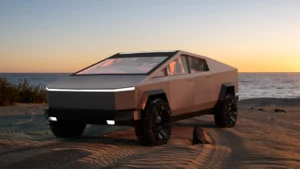

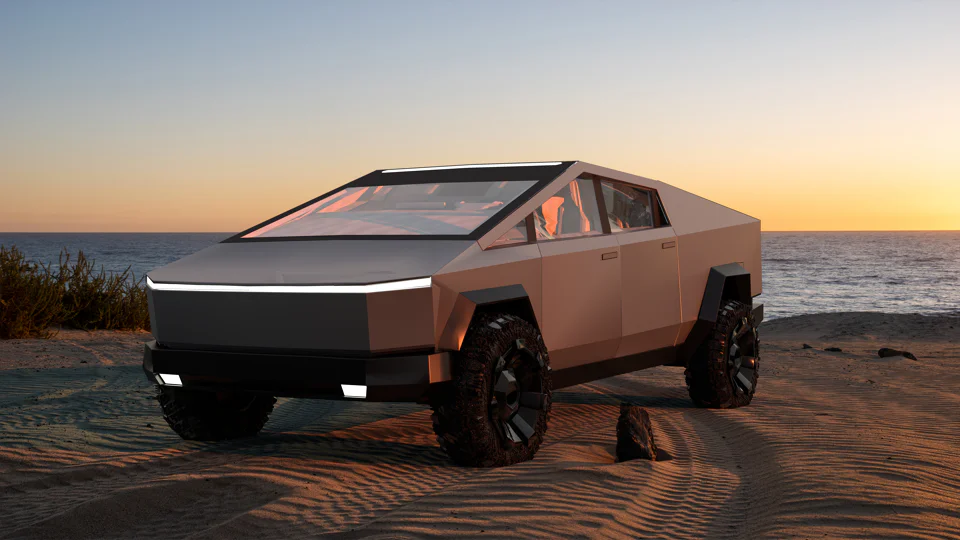
Tesla will stop building the Cybertruck at Gigafactory Texas around the middle of 2027. CEO Elon Musk announced the plan in a one-sentence post on X on November 6. He said the wind-down will “make room for increased Cybercab production,” a reference to Tesla’s robotaxi.
The post left a lot unsaid. It gave no date for the end of sales from inventory. It also said nothing about parts and service for people who already own the truck. Both Electrek’s report on the decision and InsideEVs’ coverage of the official end point to that gap.
What changes for you
If you already own a Cybertruck
Nothing changes right away. Production continues until about mid-2027, so the truck stays in Tesla’s lineup for now. What remains unclear is how Tesla will handle parts, repairs and service once the line stops. The company has not addressed this yet.
That question matters more than usual for this truck. Electrek notes that the Cybertruck has its own stainless steel body, its own castings and its own supply chain. Few of those parts are shared with other Tesla models.
If you planned to buy one
Your choices are already shrinking. According to InsideEVs, Tesla stopped taking orders for the entry-level Dual-Motor All-Wheel Drive trim around the time of the announcement. Only the Premium and Cyberbeast trims remain on Tesla’s website.
Prices also went up. InsideEVs lists the Premium AWD at $92,490, up from $89,990. The Cyberbeast now costs $102,490, up from $99,990. Electrek, writing the same day, still listed a dual-motor version from $74,990, after a $5,000 price rise in August. Check Tesla’s configurator before you plan around any trim or price.
If you live outside North America
Tesla never sold the truck in Europe or in most right-hand-drive markets, Electrek says. In late October, Tesla also canceled Cybertruck sales in Australia and New Zealand.
One private project still aims to bring the truck to Europe. Auto Motor und Sport reported on November 5 that a Swiss team wants to sell it as an independent importer from 2027. Raven Seeholzer of Werk-Lab leads the effort. Revoltaris, a Tesla repair specialist based near Zurich, is the technical partner.
The team has imported a Cybertruck Long Range and a Cyberbeast from the US. It has run tests on electromagnetic compatibility, pedestrian protection, brakes and lighting. Body edges and lights also needed rework. The project leads say Swiss approval is in its final phase, though work on key components continues. A Swiss approval would not automatically cover the rest of Europe.
Buyers would face clear trade-offs:
- A used AWD truck with 5,000 to 10,000 km would cost about CHF 155,000, including VAT. The Cyberbeast would cost about CHF 189,000.
- The built-in navigation does not work. As a result, the truck cannot precondition its battery on its own before fast charging. Revoltaris says it is working on a manual fix.
- Charging would rely on CCS and Type 2 adapters.
- There is no Tesla factory warranty. Revoltaris plans battery insurance and extra warranty options through partners.
- Some spare parts must come from the US, which can slow repairs.
- A pre-reservation costs CHF 175, and an early delivery slot costs CHF 2,000. The importer says neither payment is refundable, even if the project fails.
The report came out one day before Musk’s post. It does not say whether the end of US production changes the plan.
Planned volume vs. actual sales
The numbers explain the decision better than the post does. Tesla does not publish Cybertruck sales, so the figures below come from Electrek’s estimates and market data from Cox Automotive.
| Measure | Figure | Source |
|---|---|---|
| Production line design target | 250,000 trucks per year | Electrek |
| Installed capacity (Tesla shareholder letter) | More than 125,000 per year | Electrek |
| Estimated current pace | Roughly 30,000 per year | Electrek estimate |
| US sales, Q3 2024 | 14,416 | Cox Automotive, via Electrek |
| US sales, Q1 2026 | 3,519 | Cox Automotive, via Electrek |
| US sales, Q2 2026 | 3,744 | Cox Automotive, via Electrek |
| US sales, Q3 2026 | 4,323 | Cox Automotive, via InsideEVs |
| US sales, January to September 2026 | 11,586 | Cox Automotive, via InsideEVs |
| Total deliveries since launch | About 70,000 | Industry and Electrek estimates |
By Electrek’s math, current sales sit near 12% of the planned volume. That is also about a quarter of the capacity Tesla has already installed.
How the sales estimates work
Tesla groups the Cybertruck under “Other Models” in its delivery reports. That bucket also includes the Model S, the Model X and now the Semi. In Q3 2026, Tesla delivered 8,295 “Other Models.” That was down 48% from a year earlier and the lowest figure since Q2 2021.
Model S and Model X production ended in April 2026. For that reason, Electrek estimates that 7,000 to 8,000 of those Q3 deliveries were Cybertrucks.
Sales to Musk’s own companies
Electrek cites S&P Global Mobility data showing that SpaceX bought 1,279 Cybertrucks in Q4 2025. Musk’s companies took 1,339 trucks that quarter, or about 19% of US registrations. Electrek argues the truck would likely have been dropped earlier without those purchases.
Is floor space the real reason?
Electrek disputes Musk’s explanation. It says Giga Texas has more than 10 million square feet of factory floor, according to Tesla. Most of the Cybertruck space already sits idle, the outlet says. The Cybercab also runs on a separate line built for Tesla’s “unboxed” manufacturing process. Texas had 463 registered Cybercabs as of late October.
Electrek’s view is that weak demand and the cost of a low-volume, one-off vehicle drove the decision. It estimates Tesla lost “a couple of billions” on the program and says it likely never produced positive cash flow. The outlet compares the move to the end of the Model S and Model X, which freed space at Fremont for the Optimus robot.
Electrek also doubts Tesla will offer a more traditional electric pickup instead. It argues Musk is “betting the house on autonomy.”
Timeline of the Cybertruck
- 2019: Tesla unveils the Cybertruck concept.
- Late 2023: The truck goes on sale in the US.
- 2025: Tesla launches a cheaper rear-wheel-drive version, then drops it months later.
- April 2026: Model S and Model X production ends.
- Summer 2026: A cheaper dual-motor trim arrives.
- August 2026: Tesla raises Cybertruck prices.
- Late October 2026: Tesla cancels sales in Australia and New Zealand.
- November 6, 2026: Musk announces the wind-down. The entry-level AWD trim disappears from ordering, per InsideEVs.
- Mid-2027: Production at Giga Texas winds down.
What the Cybertruck leaves behind
Both outlets credit the truck with bringing some advanced features to a mass audience. InsideEVs highlights steer-by-wire and a 48-volt low-voltage system. Electrek praises the steer-by-wire setup and rear-wheel steering. InsideEVs asks whether other automakers will adopt those features.
The Cybertruck is not the only electric pickup to struggle. InsideEVs notes that Ford ended the F-150 Lightning last year after weak sales and rising costs.
Open questions
- How long will Tesla sell remaining inventory after production stops?
- What support will owners get for parts, body repairs and service?
- Will Tesla build the truck anywhere else? Musk’s post did not say.
- Will the Swiss import project go ahead now that US production is ending?
- Will Tesla offer any pickup to replace it?
Until Tesla answers these, owners and buyers have only one firm date: production ends around mid-2027.