
Apple Resolves HDR Scaling Issues in macOS 27
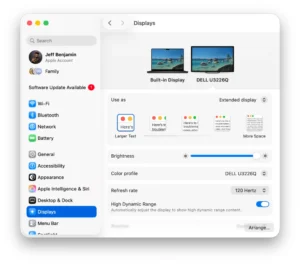
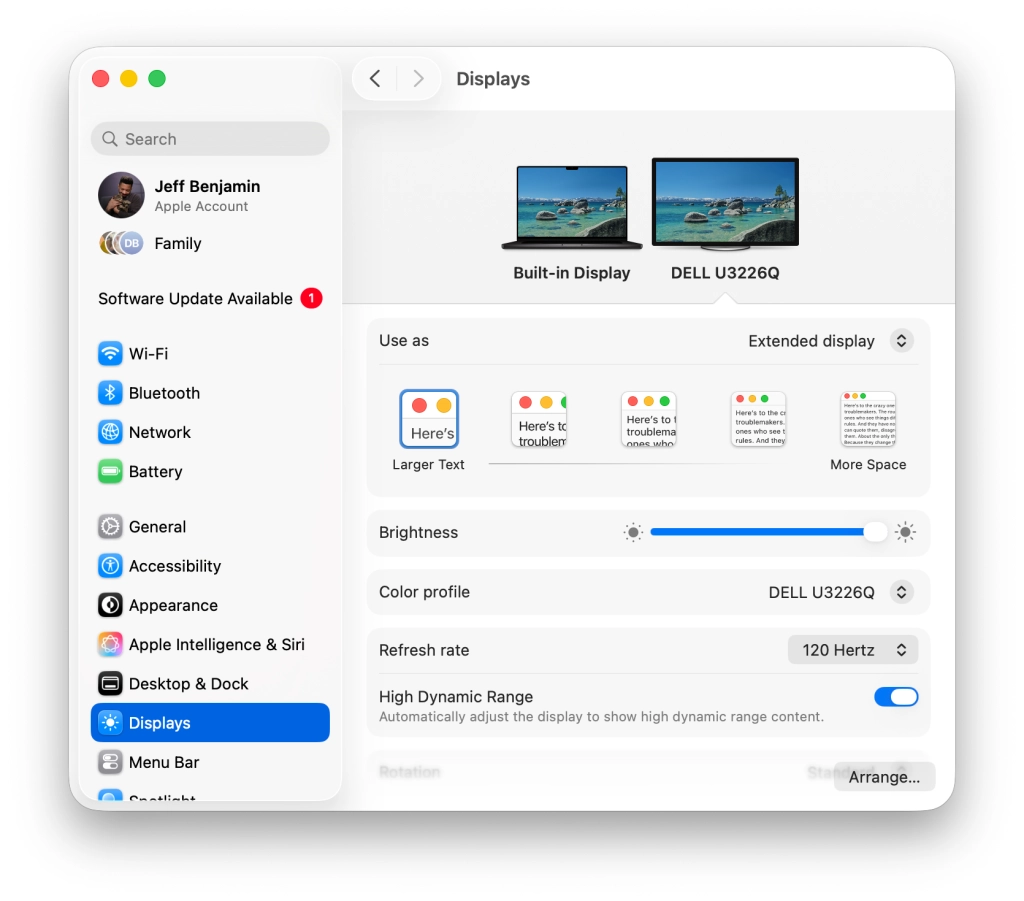
Technology publication 9to5Mac recently reported that macOS 27 Golden Gate addresses a critical display limitation. Specifically, Apple resolved an annoying issue where the operating system failed to enable High Dynamic Range at a 2560×1440 resolution on third-party HDR monitors.
High Dynamic Range technology significantly expands the brightness spectrum and color fidelity of visual content. Consequently, it preserves intricate details within both brilliant highlights and deep shadows. Creators frequently utilize this advanced capability for cinematic playback, professional photo editing, immersive gaming, and high-end video production.
Overcoming the Tahoe Resolution Constraint
Previously, macOS 26 Tahoe harbored a frustrating graphical restriction. When users activated High Dynamic Range alongside a third-party monitor, the system abruptly restricted the maximum scaled output to a mere 1920×1080 resolution.
On a spacious 32-inch 4K display, a 1920×1080 resolution severely inflates interface elements and drastically reduces usable desktop real estate. Therefore, many discerning professionals strongly prefer a scaled 2560×1440 environment.
However, beneath the macOS Tahoe architecture, selecting this preferred 2560×1440 scaling automatically disabled the High Dynamic Range toggle. The operating system immediately reverted to Standard Dynamic Range. Consequently, users could never simultaneously enjoy rich HDR visuals and optimal desktop scaling.
Expanded System-Wide HDR Enhancements
Fortunately, macOS 27 Golden Gate completely abolishes this frustrating barrier. The updated operating system now empowers users to activate High Dynamic Range while simultaneously utilizing the 2560×1440 scaled resolution. Moreover, Apple provides this capability natively, entirely eliminating any reliance on cumbersome third-party software interventions.
Beyond fixing this specific resolution constraint, macOS 27 also broadens system-wide HDR compatibility. The refined interface now renders exceptionally bright highlights, a specialized HDR cursor, and dramatically improved contrast ratios. These spectacular visual enhancements apply beautifully to the Studio Display XDR, the Pro Display XDR, and premium third-party OLED monitors.