
AMD Zen 6 BTB Context Isolation Arrives in Linux 7.4
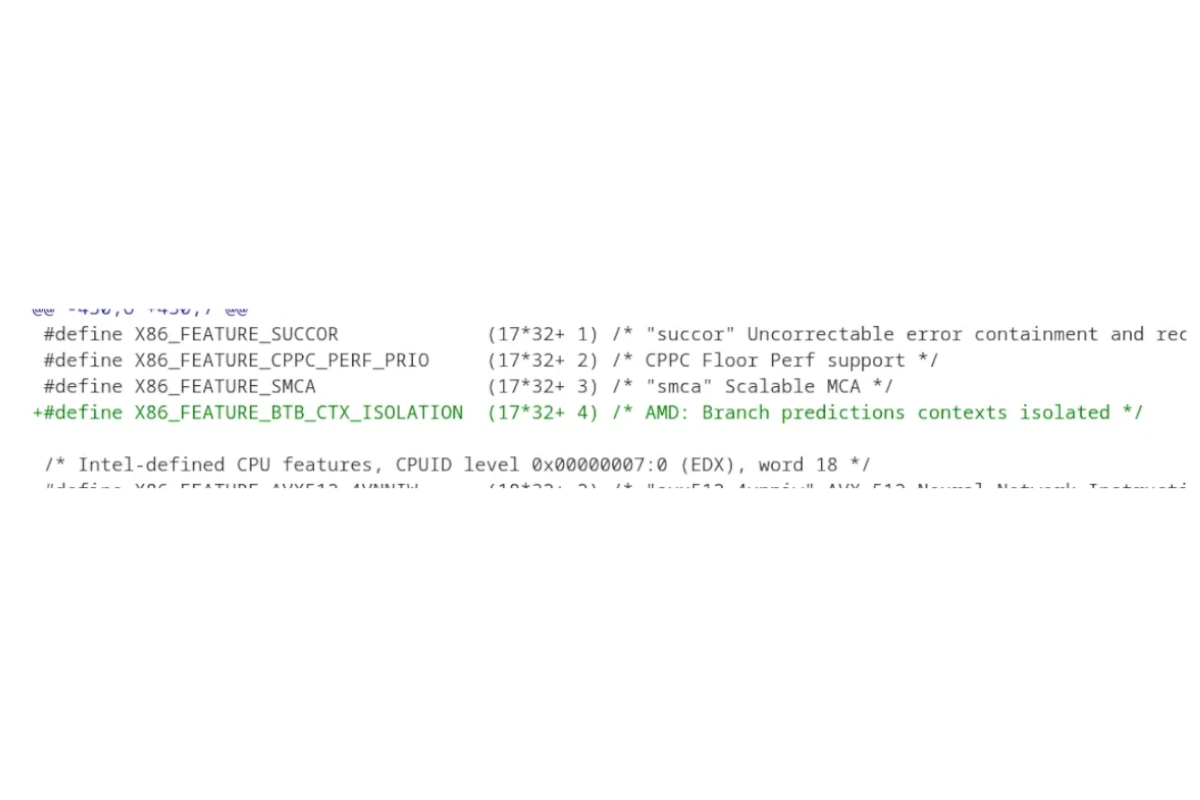
According to a recent Phoronix report, the Linux 7.4 kernel merged a crucial security update. This adjustment specifically targets AMD Zen 6 processors. Specifically, this update leverages the new Branch Target Buffer (BTB) context isolation feature. Consequently, the system can now disable the costly SafeRET mitigation. This change significantly reduces the performance penalty associated with standard security defenses.
Enhancing Execution Environment Isolation
This adjustment originates directly from the x86/bugs pull request for Linux 7.4. Furthermore, the commit notes explain a key capability of the hardware. AMD Zen 6 BTB supports tagging branch prediction information by context. This enhancement greatly helps isolate different execution environments. For instance, it separates user space from kernel space efficiently. It also isolates virtual machine guests from their host systems. Therefore, the kernel no longer relies on SafeRET under specific hardware conditions. It can safely bypass this measure for certain speculative execution vulnerabilities.
Patch Integration and Reporting Updates
AMD engineer Borislav Petkov submitted this essential patch. Subsequently, developers merged it into the x86/bugs branch on September 1, 2026. Additionally, the patch refines how the kernel reports security mitigation states. This update prevents inaccurate reporting of Spectre v2 protection status. It applies specifically to builds without RETPOLINE enabled. Currently, experts expect this patch to ship with Linux 7.4. However, the final release depends on the broader kernel development schedule.
Remaining Speculative Execution Risks
Importantly, BTB context isolation does not entirely eliminate all speculative execution risks. This hardware feature primarily separates branch prediction contexts between specific domains. It successfully divides user space and kernel space. Moreover, it separates virtual machine guests and hosts. Conversely, attack paths between separate user processes still require protection. The same applies to vulnerabilities between different virtual machines. Therefore, systems must still rely on robust Spectre v2 protection settings. They also need mechanisms like the Indirect Branch Predictor Barrier during context switches.