
GitHub Package Firewall: Real-Time Protection for npm Dependencies
A compromised npm library possesses the frightening capability to execute malicious code long before an application even launches. Consequently, GitHub determined it must scrutinize dependencies strictly prior to download. On October 20, the software giant officially introduced the GitHub Package Firewall in public preview. This innovative system funnels registry requests through stringent corporate security protocols. Ultimately, it proactively blocks any software installation that fails its rigorous inspection. Currently, this essential service operates exclusively in a public preview phase.
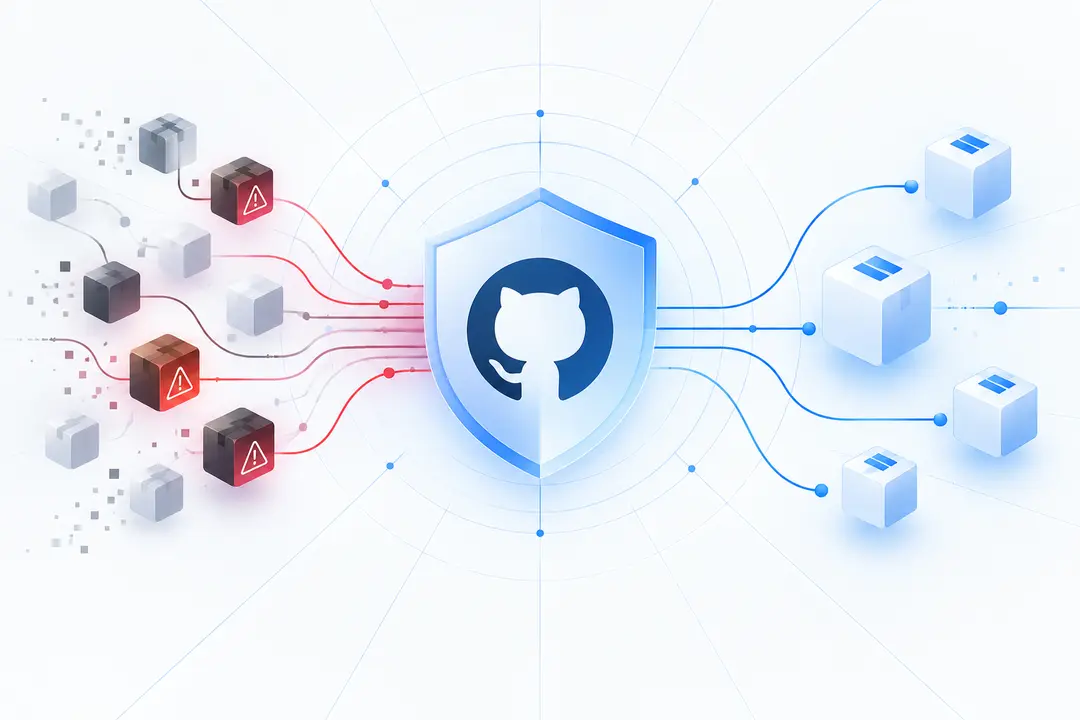
This robust filter positions itself strategically between developer workstations, automated build servers, AI agents, and the sprawling public npm registry. All metadata requests and library downloads must traverse this checkpoint. Administrators establish comprehensive policies at the enterprise tier. Concurrently, development tools redirect their inquiries away from the standard registry toward the specialized firewall address. Without this deliberate configuration, the filter cannot intercept or evaluate installations.
Multi-Layered Defense Mechanisms
One primary mechanism instantly intercepts packages explicitly flagged by the GitHub Advisory Database for harboring active malicious code. Another sophisticated layer blocks iterations suffering from recognized vulnerabilities. Administrators can finely calibrate this risk threshold, ranging from critical-level threats down to minor warnings. By default, the system restricts only critical vulnerabilities. However, it activates the malicious code scanner immediately upon deployment.
A distinct defensive strategy deliberately delays the installation of newly published package versions. This intelligent pause grants monitoring services precious time to detect potential substitutions or supply chain tampering. The default configuration enforces a 24-hour quarantine. Nevertheless, administrators possess the flexibility to extend this delay up to a full year or disable it entirely. Furthermore, official documentation details how protecting endpoints with Package Firewall involves verifying hazardous library alterations.
The Package Firewall meticulously compares versions. It halts downloads immediately if previously verified SLSA provenance confirmations suddenly vanish. Another crucial check identifies the introduction of novel preinstall and postinstall scripts. Attackers frequently utilize these scripts to execute unauthorized commands during library installation. Both of these specific evaluations remain active by default. Naturally, a suspicious indicator does not definitively guarantee an infection; therefore, occasional false-positive blockages may occur.
Combating the Supply Chain Threat Landscape
Recent, devastating supply chain attacks vividly illustrate the urgent necessity for heightened defenses. In August, the insidious Shai-Hulud worm infected 444 distinct npm packages. Astonishingly, developers downloaded these compromised packages approximately two billion times monthly. The infected archives often differed significantly from their corresponding repository source code. These malicious scripts actively hunted for sensitive developer credentials. This new filter aims to drastically reduce risks during the dependency acquisition phase. However, it cannot guarantee the detection of every conceivable threat.
The danger extends beyond explicitly malicious libraries. In October, researchers uncovered a terrifying exploit involving package substitution via abandoned GitHub repository names. This vulnerability potentially threatened over 1,500 established npm projects. An attacker simply needed to claim a vacated repository address to execute the exploit. Fortunately, experts have not confirmed any real-world attacks utilizing this specific methodology, and the underlying publication vulnerability is now patched.
The Package Firewall is currently accessible to GitHub Enterprise Cloud clients, including those utilizing regional data storage options. Presently, it exclusively supports the npm ecosystem. During this preview period, GitHub does not charge for the service. Following the full commercial launch, the company intends to implement usage-based billing. If the system erroneously blocks a legitimate package, developers can formally request an exception. The administrator then holds the final authority to permit the package.