iPhone 18 Pro Manual Shutter Disables Stacking
According to a recent report by DPReview, manually adjusting the shutter speed on the Apple iPhone 18 Pro disables multi-frame stacking. Consequently, the device captures only a single frame. Night Mode also becomes completely inactive during this process.
Pro Controls Testing Reveal Limitations
The publication recently investigated this camera behavior, and they tested the iPhone 18 Pro manual shutter speed thoroughly. Specifically, engaging manual shutter speeds completely halts the sophisticated frame stacking capability.
Apple launched the highly anticipated iPhone 18 Pro series this past September. For the first time, the primary camera system features a mechanical variable aperture. Furthermore, it introduces advanced Pro Controls for managing aperture, shutter speed, and white balance manually. However, reviewers note a glaring omission. Official promotional materials explicitly ignore this critical trade-off between manual shutter configurations and computational photography processing.
Comparing Automatic and Manual Modes
Interestingly, comprehensive analysis demonstrates that fully automatic and manual aperture modes retain full multi-frame stacking capabilities. In these states, the smartphone rapidly captures several sequential frames. It then aligns and seamlessly merges them into a single stunning photograph. This complex process effectively minimizes visual noise and dramatically enhances dynamic range.
Conversely, selecting any configuration involving a manual shutter speed forces the camera into a basic single-frame shooting mode.
Low Light Performance Deteriorates
To verify these findings, DPReview mounted the flagship smartphone on a sturdy tripod. They captured static scenes across varying lighting conditions, ranging from bright daylight to profound darkness. During this meticulous evaluation, they tested four distinct operational modes. These included fully automatic, manual aperture, manual shutter speed, and fully manual settings.
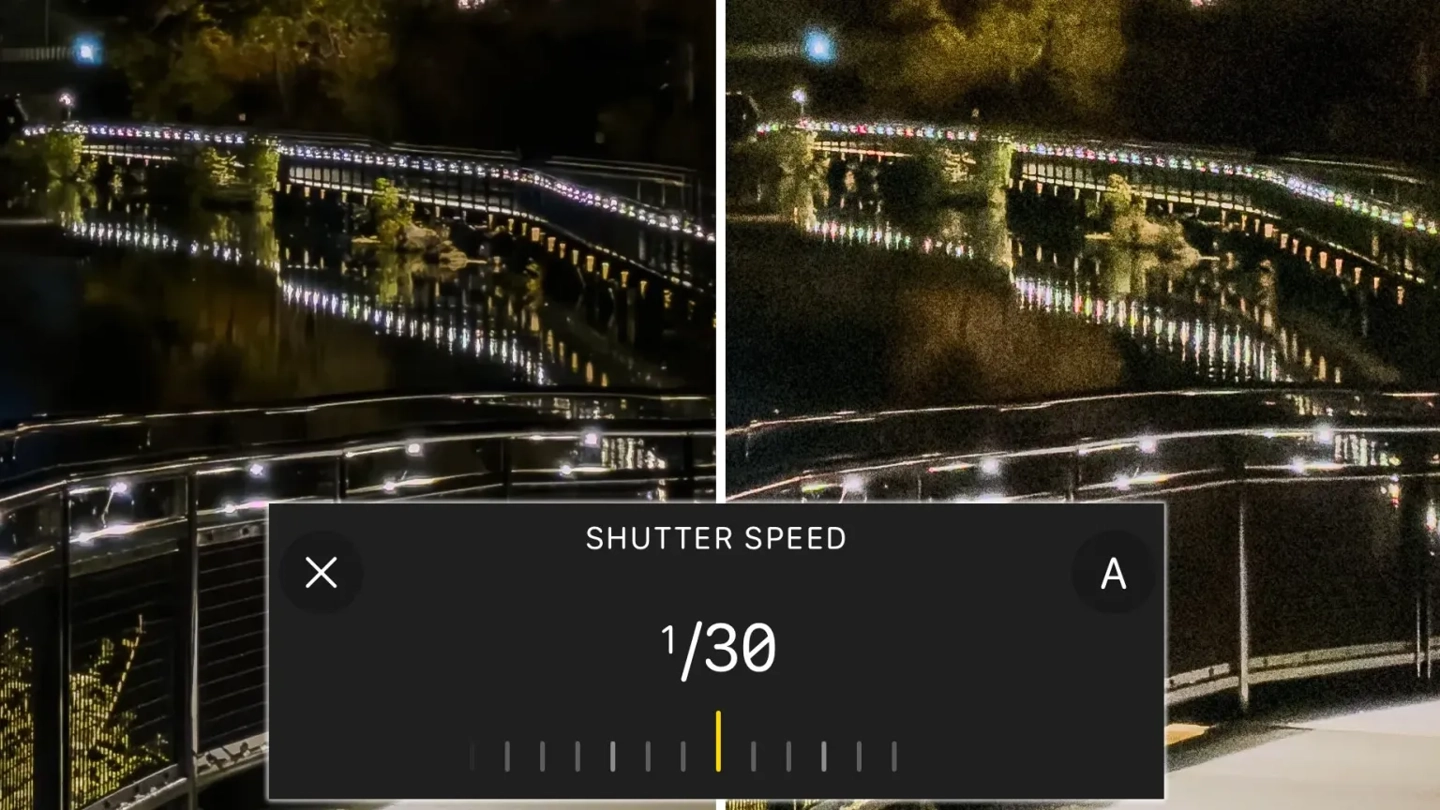
Ultimately, the final results indicate minimal differences between manual and automatic exposure under optimal lighting. Nevertheless, photos taken with a manual shutter exhibit significantly more prominent noise in low-light environments or deep shadows. For example, nighttime image samples captured at an f/1.48 aperture reveal stark visual contrasts.