
Tesla FSD Prepares for Major Navigation and Comfort Overhaul
Addressing Long-Standing Autonomous Driving Flaws
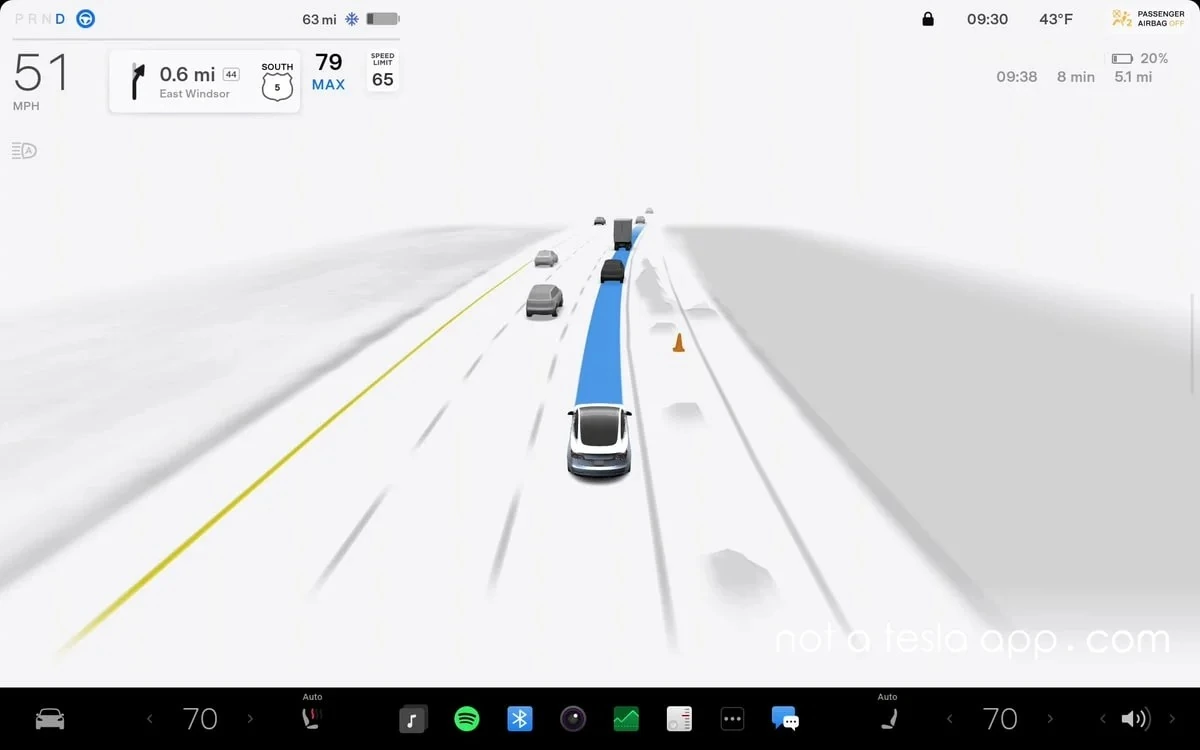
Tesla’s FSD (Supervised) has achieved monumental progress this year, expanding its footprint into European markets and officially launching the commercial autonomous Robotaxi. Nevertheless, even the most devoted users acknowledge that the system still harbors several enduring shortcomings. The two most prominent grievances reported by owners center on route optimization and damaged road surfaces. The navigation system frequently embarks on inexplicable detours, while FSD has a tendency to drive directly over hazardous, tire-puncturing potholes.
Imminent Fixes for Potholes and Routing Logic
Fortunately, resolutions for these two primary issues are swiftly approaching. Shopify executive Farhan Thawar published a post on X praising the Tesla FSD v14.3.10 update, yet he simultaneously noted that deteriorating asphalt and obstinate routing logic remain his most substantial frustrations during daily operation. Phil Duan, the lead software engineer for the Tesla artificial intelligence team, responded directly to this observation, confirming that “improvements for both of these aspects are arriving shortly.”
The Quest for Smooth Pavement
Automated pothole evasion remains one of the most vociferously requested features by the user base, an enhancement Tesla initially promised as early as 2019. Recently, Elon Musk also articulated that the pothole avoidance functionality would officially launch very soon. Furthermore, since the debut of the FSD v14.3 iteration this spring, Tesla has explicitly listed this capability as an impending improvement within its release notes.
The current iteration occasionally demonstrates rudimentary glimpses of this behavior. A beta tester utilizing FSD v14.2.2.5 recorded a video wherein the vehicle subtly adjusted its lateral positioning while in motion, allowing a fractured pavement crater to pass safely between the wheels. However, it remains currently unconfirmed whether the neural network genuinely identified the pothole, or merely reacted cautiously to an unclassified surface anomaly. Moreover, this evasive behavior has proven highly inconsistent across recent FSD iterations.
Once Tesla officially deploys comprehensive pothole avoidance, these sporadic evasive maneuvers will evolve into a stable, dependable driving logic. Consequently, drivers will no longer need to execute manual takeovers to preserve their wheel rims and ensure passenger comfort; FSD will identify compromised road surfaces in real-time and gracefully steer to circumvent the craters.
Revolutionizing Navigation Through Behavioral Learning
The navigation logic is similarly poised for a massive architectural overhaul. Although FSD handles lane changes and turns adequately, owners frequently lament the overarching routing rationale. The system persistently and stubbornly selects peculiar secondary roads for detours, rather than adhering to the driver’s customary commuting pathways.
Tesla’s strategic solution empowers FSD to actively learn the driver’s daily behavioral habits. The system analyzes manual interventions, treating the user’s deliberate lane selections and subtle steering wheel nudges as invaluable training feedback. If a driver consistently ignores the meticulously planned navigational detours, insisting instead upon a preferred highway exit or specific municipal street, FSD will subsequently memorize this predilection. In future journeys, the software will cease “fighting for the steering wheel.” This innovative capability builds upon the foundation of the ‘Preferred Routes’ feature that Tesla implemented previously.
Personalized Automated Parking
Beyond routing, this sophisticated learning mechanism will extend directly to the final parking sequence. Subsequent versions of FSD will study a driver’s unique parking idiosyncrasies. It will record whether one prefers to reverse into their home driveway, hug the garage wall to maximize pedestrian clearance, or maintain a generous distance from towering curbs. Upon completing this learning phase, the vehicle will meticulously attempt to emulate these personalized habits during automated parking maneuvers.
Integrating Grok AI and Future Neural Architectures
In addition to pothole perception and more intelligent route planning, Tesla is currently integrating Grok directly into the overarching FSD ecosystem. Drivers will no longer need to navigate cumbersome touchscreen menus; they will soon possess the ability to issue autonomous driving commands using natural conversational voice. For example, occupants can instruct the vehicle to turn at a specific intersection, park in a designated location, or spontaneously alter the travel route. Coupled with the recently launched automated collision avoidance feature – which can reactivate FSD assistance to evade danger even during manual driving – it is abundantly clear that Tesla is currently iterating FSD at a remarkably accelerated and intense pace.
Pothole avoidance was initially documented in the v14.3 release notes, yet it remains uncertain whether this profound upgrade will arrive via an imminent minor patch or wait to formally debut within the overarching FSD v15 architecture. FSD v15 is projected to usher in a monumental neural network upgrade, boasting an astounding 10 billion parameters. Regardless of the deployment schedule, empowering the vehicle to skillfully evade road craters and faithfully remember an owner’s preferred transit routes will unequivocally render the daily autonomous commuting experience significantly more seamless and refined.