
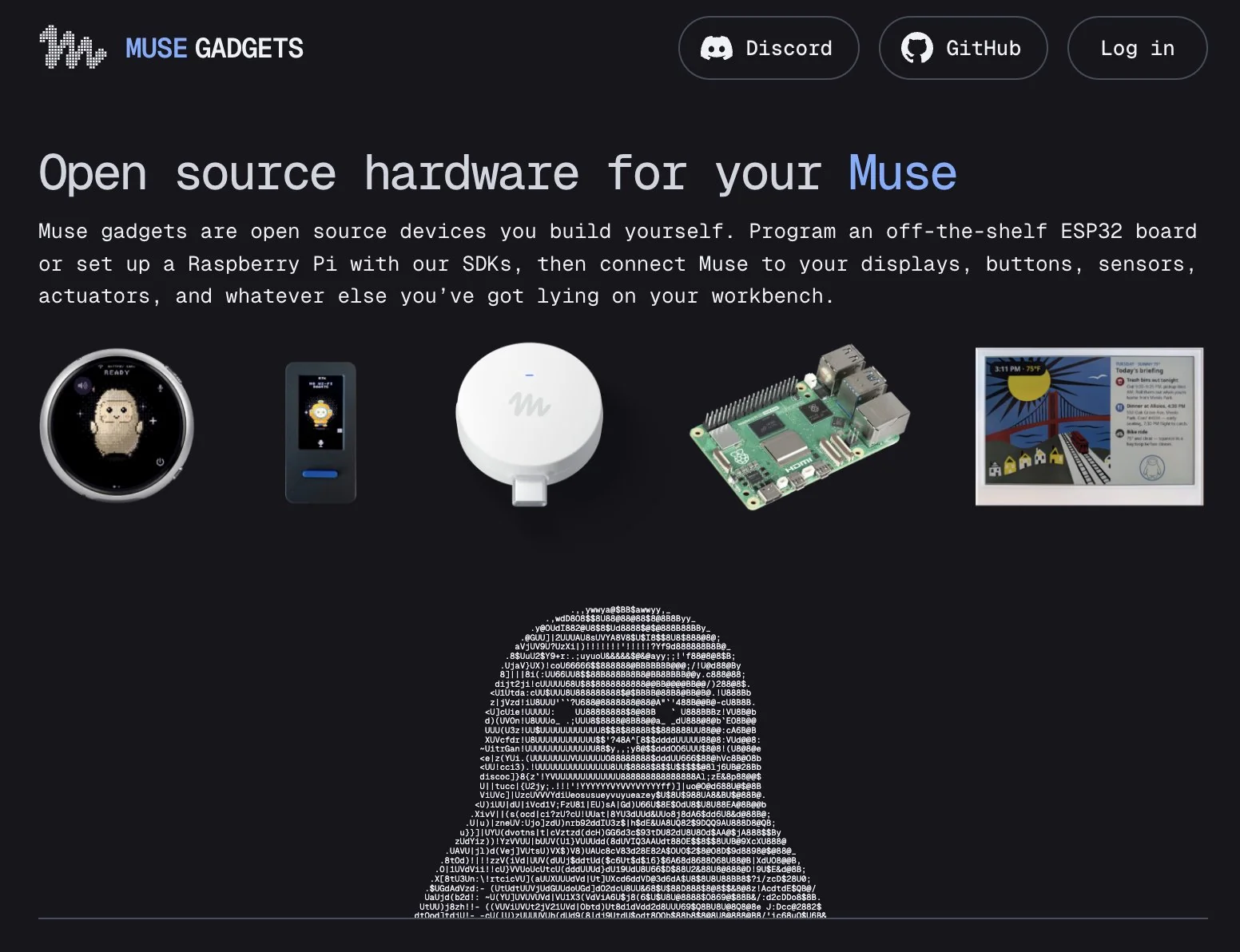
Meta Announces Muse Gadgets Open-Source Initiative
On October 2, Meta officially unveiled Muse Gadgets. This represents an innovative open-source initiative. It empowers developers to construct bespoke hardware for Muse. Muse serves as the ultimate personal artificial intelligence agent.
Concurrently, the tech giant released essential development tools. They published the ESP32 firmware and Linux device software development kit. Developers can find these on GitHub under the Apache 2.0 license. Consequently, creators can seamlessly link cost-effective ESP32 boards directly to Muse. They can also connect Linux environments like the Raspberry Pi. Therefore, users can integrate displays and interactive buttons. They can easily add sophisticated sensors and actuators. Furthermore, they can attach various interconnected peripherals to their workstations.
Expanding Hardware Compatibility
Regarding hardware compatibility, the official ESP32 documentation currently supports eleven development boards. These include the officially recommended Espressif ESP32-C5 DevKitC-1. The list also features the M5Stack StickS3 and the Waveshare ESP32-S3-Touch-AMOLED-1.75C. Additionally, it supports Seeed electronic paper displays.
Notably, six of these boards can render a comprehensive screen user interface. They feature animated avatars and push-to-talk functionalities. They also offer intricate settings menus. Furthermore, boards endowed with ample memory facilitate home network tunneling. This extraordinary feature empowers Muse to interact with existing smart appliances. It also connects with any custom-built contraptions exposing a local HTTP application programming interface.
Transitioning to the Linux toolkit, Meta currently extends support to multiple devices. These include the Raspberry Pi 3B+, 4, 5, and Zero 2 W. They also support other Linux-based machines equipped with Bluetooth Low Energy capabilities. Fundamentally, the system requirements mandate Raspberry Pi OS Bullseye. Users can also deploy Debian 11 or Ubuntu 22.04.
Command Execution and Security Privileges
According to the official documentation, Muse executes commands precisely. It assumes the identity of the account selected during installation. Consequently, it adopts all associated privileges. The guidelines explicitly state a crucial security detail. If the designated account wields superuser privileges, Muse inherently possesses them.
To ensure security, the installer mandates explicit confirmation. It requires this before transferring these profound permissions. The system meticulously alerts the user if it detects superuser access. Alternatively, developers retain the autonomy to designate a distinct account. They can utilize specific installation commands to select an unprivileged profile.
Operating within a Linux ecosystem, the agent effortlessly executes shell commands. It can read and write files without friction. Additionally, it can monitor the overall health of the device. Official illustrative prompts include instructing the assistant to install Home Assistant. Another example involves commanding it to verify daily backups. It can perform this check every morning at seven o’clock.
The Introduction of Muse Home Link
It is particularly noteworthy that the enterprise leveraged this software kit. They utilized it to forge a finalized consumer product. This creation is the Muse Home Link. Nat Friedman serves as the visionary product leader at the Meta Superintelligence Laboratory. He described this device as a diminutive, USB-C powered apparatus.
This bridge seamlessly connects the artificial intelligence to the domestic network. Thus, it facilitates fluid communication with televisions and acoustic speakers. It also connects with diverse smart appliances possessing secure network interfaces. Friedman disclosed that the company manufactured an initial batch of units. They produced approximately five thousand devices. The company offers these complimentarily to domestic subscribers. They distribute them on a strictly first-come, first-served basis. Furthermore, they limit the offer to a single device per individual.
A Broader Ecosystem Expansion
The grand introduction of this hardware initiative carries significant weight. It constitutes a vital component of a broader ecosystem expansion. As reported by TechCrunch, the conglomerate recently unveiled a specialized variant. They tailored this version specifically for small enterprises.
This commercial tier features a complimentary version with restricted usage. It also offers premium subscriptions priced at twenty or one hundred dollars monthly. Consequently, this robust platform integrates effortlessly with indispensable third-party applications. These tools include Shopify, Dropbox, Slack, Canva, Figma, and QuickBooks.
Furthermore, The Next Web reported the establishment of a novel commercial division. This new entity is the Meta Enterprise Platform. CJ Desai, the former chief executive of MongoDB, guides this ambitious department. It actively harmonizes an array of sophisticated products. By unifying diverse agents, the division strives to evangelize advanced artificial intelligence tools. They aim to serve a vast corporate clientele.
The Future of Cross-Hardware AI Runtimes
From an industry perspective, this initiative signifies a profound strategic pivot. The corporation is actively elevating its creation. They want to transform a rudimentary chatbot into an omnipresent environment. They envision a cross-hardware intelligent runtime ecosystem.
If third-party hardware exposes standardized interfaces, Muse can comprehend them. Personal agents could soon usurp traditional computing roles. They might replace operating systems, applications, and smart home hubs.
Nevertheless, the official documentation provides refreshingly candid warnings regarding inherent perils. The community pairing process lacks manufacturer validation. Consequently, this vulnerability leaves it susceptible to active interception. Thus, pairing within a highly trusted network remains strongly advised.
Embedded security tokens must act merely as identifiers. Users should never treat them as infallible passwords. A compromise requires immediate revocation and systemic reconstruction. Because wireless credentials reside in flash memory, enabling robust encryption remains necessary. Furthermore, developmental builds utilize rudimentary cryptographic signatures. The developers disabled secure booting by default.
The documentation concludes with a stark, albeit humorous, caveat. “Potential side effects of tinkering may include permanently bricking your device,” it reads. It also mentions voiding warranties, experiencing voltage drops, or facing financial ruin. “Proceed entirely at your own risk.”