
A Glimpse into the Next Generation of Handheld Processing
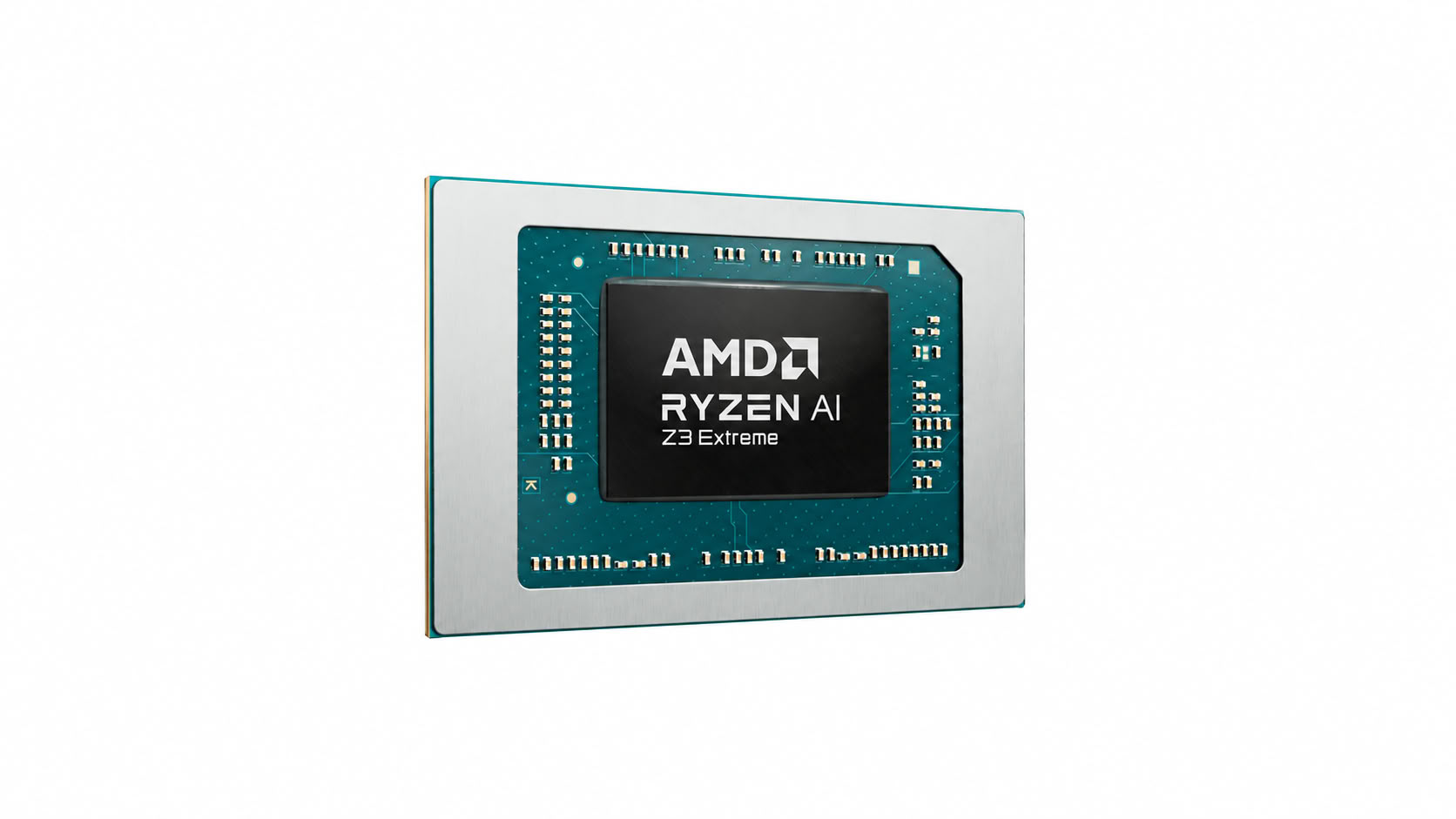
Recent leaks have illuminated the specifications of AMD’s forthcoming Ryzen Z3 series, the next generation of processors meticulously designed for handheld gaming consoles. According to current disclosures, the Ryzen Z3 will feature a semi-custom architecture rooted in the Zen 6 framework. It potentially equips the CPU with a mere six cores and twelve threads. Simultaneously, it integrates up to twelve RDNA 4m compute units. Compared to the existing Ryzen Z2 Extreme, which boasts an eight-core, sixteen-thread configuration alongside sixteen compute units, this new iteration seemingly exhibits a numeric reduction. Nevertheless, AMD appears intent on radically recalibrating resource allocation. They aim to optimize the delicate balance between the CPU and GPU within highly restricted power envelopes.
Embracing a Revolutionary Architectural Paradigm
Information divulged regarding the next-gen handheld series suggests that the Ryzen Z3 shares foundational intellectual property with AMD’s imminent Medusa Point platform. This prominently includes technologies like Zen 6 and RDNA 4m. However, rather than directly replicating the standard Medusa Point blueprint, it employs a semi-custom paradigm optimized specifically for handheld confines. The currently exposed configuration comprises four standard Zen 6 cores gracefully augmented by two low-power cores. Yet, leakers emphasize that this CPU arrangement remains susceptible to imminent alteration. Therefore, the definitive retail specifications are not yet fully solidified.
Redistributing Core Processing Resources
Should this design manifest in reality, the Ryzen Z3 will emerge as a pivotal product in AMD’s recent efforts to redistribute silicon resources. The standard Medusa Point was previously rumored to incorporate ten cores in total. Conversely, the Ryzen Z3 might entirely discard the four specialized Zen 6c cores. It brilliantly repurposes the conserved silicon area and power budget to vastly expand the GPU partition. The GPU undoubtedly constitutes the most compelling aspect of the Ryzen Z3. Reports indicate the chip will be furnished with twelve formidable RDNA 4m compute units.
Elevating Handheld Graphics Performance
In essence, AMD might strategically sacrifice four CPU cores in exchange for four supplementary GPU clusters. This decision decisively skews the chip’s overarching prowess toward gaming graphics performance. However, RDNA 4m is not strictly synonymous with the unabridged RDNA 4 architecture. Based on available intelligence, RDNA 4m bears a closer resemblance to an enhanced, refined iteration of RDNA 3.5. It integrates select RDNA 4-tier matrix computation hardware seamlessly into the pre-existing framework. Consequently, despite the inclusion of “4m” in its nomenclature, it cannot be simplistically construed as a fully realized RDNA 4 GPU.
The Power of Advanced Image Reconstruction
The pragmatic significance of this evolution lies in the theoretical capability of RDNA 4m to deliver vastly superior matrix computation. This empowers AMD’s latest generation of image reconstruction technologies. Current leaks postulate that this architecture can natively support FSR 4-related computational advancements. For handheld consoles, such technologies may prove significantly more crucial than merely augmenting raw GPU compute units. These devices are typically constrained by an unforgiving 15 to 30-watt power limitation. Leveraging low-resolution rendering in tandem with AI-assisted image reconstruction can yield substantially higher final output resolutions and frame rates.
Navigating Power Consumption and Efficiency
Evaluated purely on paper specifications, the Ryzen Z3 might paradoxically evoke a fleeting sense of regression. The current Ryzen Z2 Extreme utilizes an eight-core CPU alongside sixteen RDNA 3.5 compute units. In contrast, the prospective Ryzen Z3 may transition to a streamlined six-core configuration with twelve compute units. If one solely compares raw core counts, the prospective offering conspicuously lacks a numerical advantage. Yet, evaluating divergent architectures exclusively through quantities is a fundamentally flawed premise. Zen 6 is projected to possess vastly superior single-core performance and energy efficiency relative to its Zen 5 predecessor.
Optimizing for the Handheld Power Envelope
More imperatively, the quintessential limitation of handheld consoles revolves exclusively around the optimal distribution of finite electrical power. For the overwhelming majority of handheld gaming scenarios, the GPU intrinsically acts as a more prominent bottleneck than the CPU. Therefore, by subtracting CPU cores and adding GPU compute units, AMD proactively shifts the chip’s performance center of gravity. Regarding power consumption, prevailing intelligence suggests the standard Ryzen Z3 will be meticulously optimized for approximately 15 watts. Conversely, the more premium Ryzen Z3 Extreme may confidently target an envelope of roughly 25 watts.
Mastering Compact Chip Packaging
If these power targets hold unequivocally true, the Ryzen Z3 will exhibit a stark ideological divergence from contemporary 35-watt processors. AMD seemingly aspires for its next-generation silicon to achieve exalted graphics efficiency at profoundly diminished power thresholds. Another transformation commanding widespread attention is the physical packaging dimensions. The Ryzen Z3 will reportedly adopt AMD’s diminutive FF6 packaging, measuring an exact 25 by 25 millimeters. This is substantially smaller than the FP8 packaging currently employed by the Strix Point lineage.
Liberating Crucial Hardware Real Estate
This significantly more compact footprint will inevitably liberate highly critical motherboard real estate for ambitious handheld manufacturers. For hardware engineers, this architectural decision bears profound practical significance. Unlike conventional laptops, handheld consoles possess exquisitely constrained internal volumes. Thermal solutions, robust batteries, and mechanical interfaces all voraciously consume available space. Consequently, the diminished chip packaging dimensions can genuinely empower manufacturers to engineer substantially thinner and lighter devices.
A Paradigm Shift for Mobile Gaming
Concurrently, the Ryzen Z3 might seamlessly instigate a sweeping metamorphosis across AMD’s entire handheld silicon portfolio. Previously, the Ryzen Z2 series exhibited profound complexity, intermingling varying architectures that spanned from Zen 2 to Zen 5. The currently surfaced Ryzen Z3 schematic resembles a dedicated, bespoke platform meticulously forged from its inception solely for next-generation handhelds. It is imperative to acknowledge, however, that all current intelligence originates strictly from unofficial conduits. Crucial parameters remain profoundly susceptible to sweeping alteration prior to the product’s formal inauguration.
If the prevailing leaks ultimately find concrete validation, the Ryzen Z3 will encapsulate a profound paradigm shift in AMD’s overarching philosophy. Rather than relentlessly amassing superfluous CPU cores, the company appears fiercely determined to radically recalibrate resource allocation. By strategically diminishing CPU cores while concurrently augmenting GPU resources, AMD ardently aspires to translate every solitary watt of power directly into superior visual fidelity. Ultimately, strategically sacrificing CPU cores may paradoxically emerge as the definitive methodology to elevate the holistic gaming experience.