
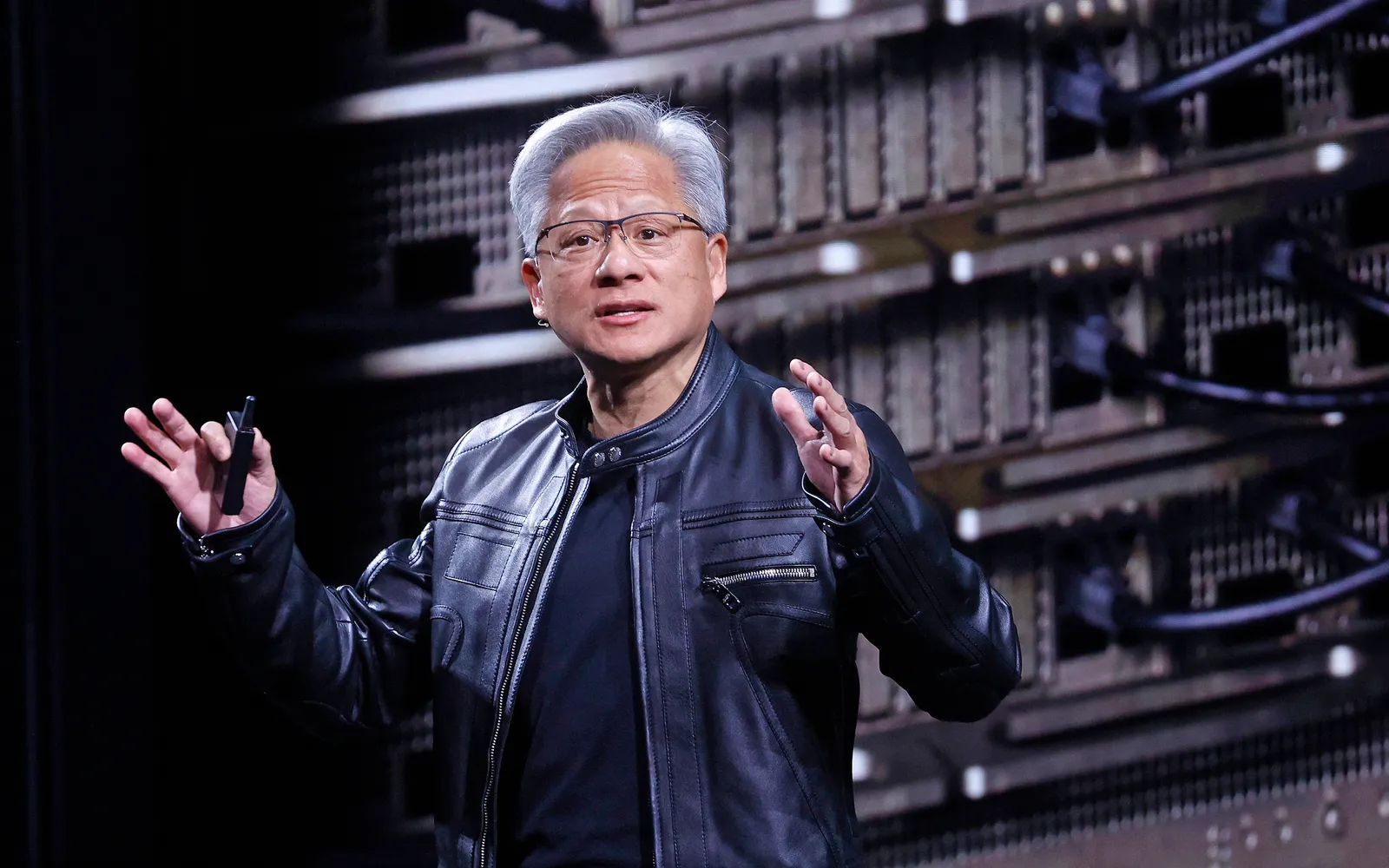
Nvidia CEO Jensen Huang has no contract that protects his job. He is an at-will employee who can be let go at any time without severance, according to a corporate filing cited by WIRED’s report on the fallout for the AI industry. That detail now carries real weight. On November 8, Nvidia’s board opened an independent investigation tied to Huang.
The probe follows reports that Huang was the target of a foreign intelligence effort. He has since admitted to an affair with Alice Huang, a former executive at Singapore-based Megaspeed. US intelligence reportedly concluded that she was a Chinese intelligence asset.
What the Nvidia board announced
The Nvidia board’s statement says a committee of independent directors will oversee the review. Outside independent counsel will assist that committee. The statement does not name the directors or the law firm. It also gives no timeline.
The board said it has “no reason to believe” that national security or Nvidia secrets were compromised. Still, it plans to examine all available information. It expressed confidence in Huang and his leadership team. Huang “fully supports the review and has committed to cooperating with it,” the board said.
A company spokesperson went further, as Investing.com reported. “Jensen is committed to continuing to lead NVIDIA as CEO without interruption,” the spokesperson said.
What Huang told employees
Nvidia also published a message from Huang to staff, according to TechCrunch. “I was unfaithful to my wife. My actions hurt her and our children,” he wrote. He added, “There is no excuse for what I did.”
Huang did not name Alice Huang in the message. He said he had “fallen short” of his responsibility to the company. He told colleagues, the board, partners and shareholders that “you deserve better from me.”
The tone marks a shift. Before the board stepped in, Nvidia had called the pair’s interactions “not unusual,” TechCrunch reported. The company also said it does not share classified information with customers. A memo seen by US policymakers earlier this year claimed that China’s Ministry of State Security recruited Alice Huang to spy on Nvidia’s CEO.
Why it matters for the AI industry
Few companies depend on one person the way the AI sector depends on Huang. Nvidia controls about 90 percent of the market for chips used to train frontier AI models, WIRED reported, citing Silicon Analysts’ market share analysis. That analysis puts Nvidia’s training share above 90 percent. Its revenue share of all AI accelerators is lower, at an estimated 75 percent for 2026.
Those chips are in short supply. “He’s the person who decides who gets the chips and who doesn’t,” Harvard Business School professor David Yoffie told WIRED. When Elon Musk wants a new data center, Yoffie said, he can call Huang.
Nvidia is also an investor in its biggest customers
Nvidia does not only sell to AI labs. It also funds them. The table below shows two of its largest recent commitments, based on the companies’ own announcements.
| Company | Announced | Nvidia commitment | Compute tied to the deal |
|---|---|---|---|
| Anthropic | November 18, 2025 | Up to $10 billion | Up to 1 gigawatt of Nvidia Grace Blackwell and Vera Rubin systems |
| OpenAI | February 27, 2026 | $30 billion, part of a $110 billion round | 3 gigawatts of inference and 2 gigawatts of training on Vera Rubin systems |
Microsoft joined the Anthropic deal with up to $5 billion, according to Nvidia’s announcement of the Microsoft and Anthropic partnership. Anthropic, in turn, committed to buy $30 billion of Azure compute. OpenAI’s funding announcement lists SoftBank at $30 billion and Amazon at $50 billion. That round valued OpenAI at $730 billion before the new money.
For these labs, the CEO question is not abstract. Nvidia is both their key chip supplier and a major investor. What remains unclear is how any leadership change would affect chip allocation or future funding.
The succession question nobody can answer yet
Huang cofounded Nvidia in 1993 and has led it ever since. He manages small details, answers emails from any of roughly 60,000 staff and raises his voice to make points, current and former employees told WIRED. No other Nvidia executive comes close to his public profile.
“We have no idea who would replace him,” Yoffie said. He added that customers would not know what a new CEO might mean for them.
Ryan Fedasiuk, a senior fellow at the Foundation for American Innovation, called Huang irreplaceable in some ways. He still argued the company must come first. “He has to be replaceable as the CEO of the world’s largest company,” Fedasiuk told WIRED.
Wall Street analysts raised the same concern. Bernstein’s Stacy Rasgon flagged key-man risk, Investing.com reported. He said some espionage claims look “more form than substance,” but called the situation “a (very) bad look.” Citi listed governance, regulatory scrutiny and long-term leadership stability among investor worries.
Huang earned $36 million last year. He owned about 3.5 percent of Nvidia as of March, according to the filing WIRED cited.
How markets and Washington reacted
The share price reaction differs by source. WIRED said Nvidia stock fell more than 4 percent on Monday, even as broader indices rose. Investing.com described an 8 percent plunge.
President Donald Trump defended Huang. He called him “an honorable guy” and said he had not spoken with him about the matter, Investing.com reported. Asked whether Huang would join an upcoming Asia trip, Trump said, “I’d certainly take him.” Huang went with Trump to China earlier this year and to the UK in 2025.
Congress is also involved. Senior House Republicans had already asked Huang to brief lawmakers this month.
Export controls are back on the table
Huang has long argued against tougher chip export rules for China. Both the first Trump administration and the Biden administration limited China’s access to Nvidia chips. In his second term, Trump loosened those rules and allowed sales of older Nvidia chip generations.
Sam Bresnick, a research fellow at Georgetown’s Center for Security and Emerging Technology, expects the scandal to speed up a crackdown. “I expect there to be more scrutiny on what’s going on, what’s getting sent to China,” he told WIRED. He also expects more scrutiny from the Commerce Department.
Citi pointed to a related risk: export-control compliance over H200 chips reaching China through intermediaries. Fedasiuk raised a wider worry. He said China may have gained sensitive information about US AI companies and Washington’s China strategy.
What to watch next
The board’s review will most likely focus on whether Huang broke company policy, Yoffie told WIRED. The FBI could separately look at whether any laws were broken. Congress may examine whether the affair shaped US chip policy toward China. None of those steps has been announced.
Several questions remain open:
- Who sits on the board committee, and which law firm is helping it?
- How long will the review take, and will Nvidia publish its findings?
- Will Huang agree to brief House lawmakers?
- Will the Commerce Department change how it reviews Nvidia’s China sales?
Other AI companies have already warned staff about possible spies, including people who offer romance, TechCrunch noted. For now, the board says it backs Huang. Its findings will show whether that support holds.