
Nvidia Breaks Records With Quantum Computing Simulation
On October 19, Nvidia announced a major milestone. Nvidia ran a record-breaking fault-tolerant quantum computing simulation. They achieved this incredible feat at the Julich Supercomputing Centre in Germany.
Europe’s Largest Supercomputer
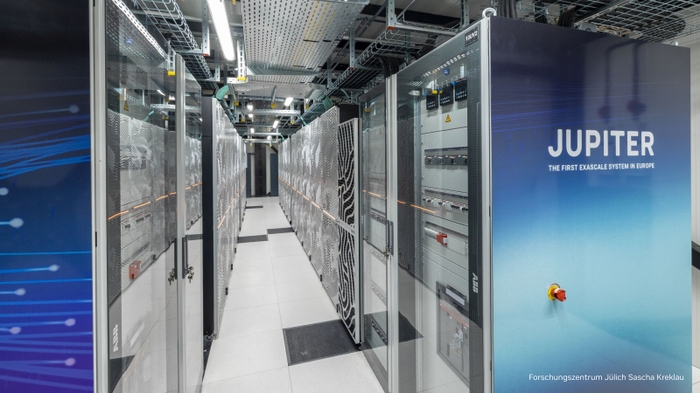
Nvidia researchers utilized the massive JUPITER supercomputer. Consequently, they completed the largest comprehensive quantum simulation to date. This powerful system utilizes Nvidia GH200 superchips. Furthermore, the team deployed 8,192 GPUs for this ambitious project. They successfully simulated a 104-qubit fault-tolerant quantum computing system.
Exploring Magic State Cultivation
This simulation allows experts to validate Magic State Cultivation thoroughly. Previously, traditional methods required an enormous amount of physical qubits. However, this new approach reduces physical qubit consumption by 90 percent. Therefore, it will significantly accelerate practical quantum computing applications. Industries like drug discovery and financial modeling will benefit immensely.
Additionally, the simulation revealed how noise affects quantum systems. Researchers can now optimize their hardware designs much earlier. Ultimately, this breakthrough shortens the path to practical quantum computers.
The Power Behind JUPITER
JUPITER stands as Europe’s first Exascale supercomputer. The Julich Supercomputing Centre proudly operates this machine. Eviden provided the core JUPITER Booster architecture. It packs roughly 24,000 Nvidia GH200 Grace Hopper superchips. As a result, it performs one quintillion calculations every second. The facility officially launched this machine in 2025. Germany and Europe jointly funded this massive project.
Solving the Qubit Problem
Magic State Cultivation offers a brilliant solution for quantum scaling. Before its invention, systems relied on traditional magic state distillation. That older method consumed 90 to 95 percent of physical qubits. Conversely, Magic State Cultivation compresses this massive overhead. It generates quantum states using small, interactive color codes. Then, it grafts them into surface codes seamlessly.
Recently, the Google Quantum AI team published related research. They achieved Magic State Cultivation on their Willow processor. Nevertheless, their success still required validation on a massive scale. Nvidia’s simulation perfectly bridges that exact gap.
Nvidia’s Technical Execution
Nvidia executed this massive simulation with incredible speed. Earlier studies at Julich only simulated 50 qubits without noise. In contrast, Nvidia tested 104 qubits under realistic hardware noise. The team scaled the method from just 4 GPUs initially. Eventually, they migrated the workload to 8,192 GPUs on JUPITER. Thus, they shrank a multi-week simulation into mere days. They utilized the cuQuantum library and the CUDA-Q platform.
The Future of Quantum Computing
Nvidia CEO Jensen Huang emphasized the need for fault-tolerant systems. He stated that understanding system behavior is absolutely crucial. Similarly, Julich Supercomputing Centre Director Kristel Michielsen praised the progress. She noted that European investments empower researchers to tackle complex problems. Consequently, scientists can identify the best designs for real-world applications.
Interestingly, Quantinuum also announced a major milestone on the same day. They claimed record logical fidelity for their Helios machine.