

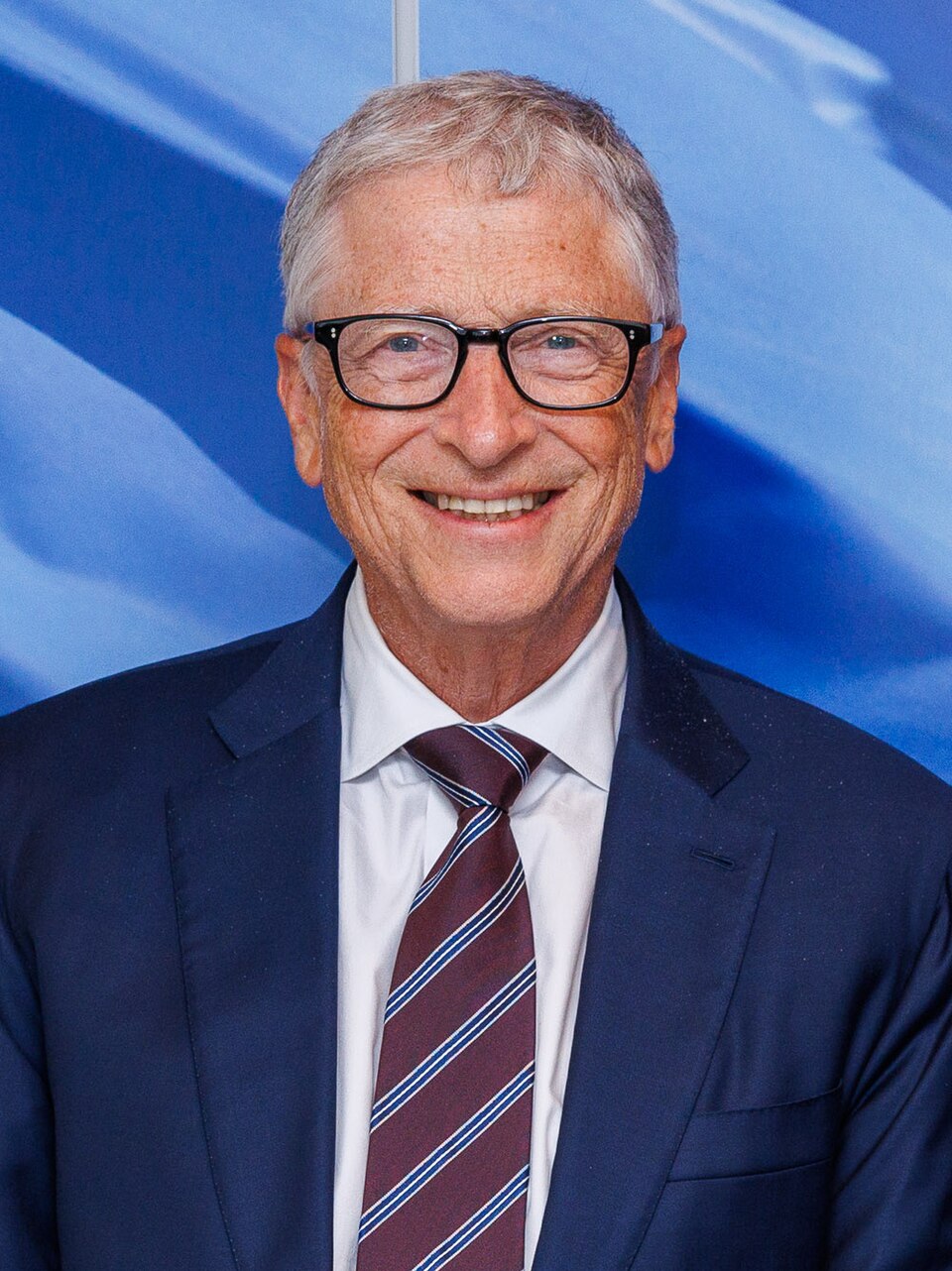
Bill Gates has issued a stark warning that malefactors armed with advanced artificial intelligence systems possess the capability to orchestrate events culminating in a “billion deaths.” The Microsoft co-founder perceives the convergence of individuals harboring malicious intent with rapidly evolving AI tools as a weapon of unprecedented magnitude, asserting that voluntary restraint by developers is no longer sufficient.
In an excerpt from a Meet the Press interview broadcast on September 24, Gates refrained from quantifying the probability of such an outcome or providing a calculation detailing how AI would precipitate the demise of a billion souls. Rather, the discourse centered on an extreme risk scenario wherein AI drastically amplifies the capabilities of those already predisposed to inflict harm.
Gates unequivocally endorsed governmental regulation of AI developers. He contends that industry self-regulation is inadequate, necessitating the involvement of policymakers and law enforcement in formulating mandatory security measures and oversight mechanisms. While additional requirements will inevitably inflate corporate expenditures, Gates does not believe such scrutiny will severely impede technological advancement.
The entrepreneur meticulously delineated specific scenarios in August while dissecting AI perils. These models lower the barrier to entry for cybercriminals, facilitating the identification of software vulnerabilities, the creation of malicious code, and the escalation of attacks. Hospitals, financial institutions, power grids, water supply networks, and governmental services could find themselves besieged. Gates perceives a distinct menace in bioterrorism, as the very instruments that expedite the development of therapeutics and vaccines harbor the latent potential to aid in the synthesis of perilous pathogens.
The cybernetic dimension of such a scenario has already transcended mere theory. In September, Anthropic published an updated intelligence dossier regarding the misuse of Claude between December 2025 and August 2026. The enterprise unearthed operations wherein the AI participated in reconnaissance, vulnerability exploitation, data exfiltration, and the reconstitution of malicious tools following detection by security apparatuses. In certain campaigns, the agents executed a substantial portion of the attack chain autonomously, with human overseers merely designating targets and supervising the outcome.
Regarding biological threats, the landscape remains considerably less definitive. Anthropic designates the potential utilization of models for the genesis of biological weaponry as one of the most profound risks associated with frontier AI, whilst simultaneously emphasizing the absence of empirical evidence that contemporary models presently facilitate the realization of a catastrophic scenario in practice. Earlier iterations of Claude operated significantly below the threshold required to meaningfully assist an experienced specialist in hazardous biological research. However, for newer models, the enterprise withholds such a confident assessment, thereby fortifying restrictions regarding dual-use inquiries.
Anthropic further disclosed five instances wherein patrons utilized Claude for research potentially affiliated with the engineering of more virulent pathogens, toxins, or alternative dual-use technologies. In one episode, the model assisted in planning experiments concerning the adaptation of avian influenza to mammals; nevertheless, Anthropic evaluated the AI’s contribution primarily as facilitative in data analysis, experimental design, and navigating scientific literature. The corporation explicitly cautioned that while such occurrences demonstrate the fascination of perilous actors with AI, they do not substantiate the imminence of a biological cataclysm.
Gates, however, does not advocate for the abandonment of artificial intelligence. In his estimation, this singular technology possesses the capacity to accelerate advancements in medicine, education, and scientific inquiry, or alternatively, to bestow upon cybercriminals and other adversaries capabilities that previously necessitated vast syndicates, immense wealth, and specialized expertise. The paramount question for the ensuing years, as Gates perceives it, is not whether AI will augment in power, but rather whether governments and developers will succeed in erecting formidable defenses before hazardous capabilities become ubiquitously accessible.